Thai Yoga Concepts: Sustainable Eating and Sustainable Health: Part 1 of 4

Thai Yoga Concepts: Sustainable Eating and Sustainable Health: Part 1 of 4

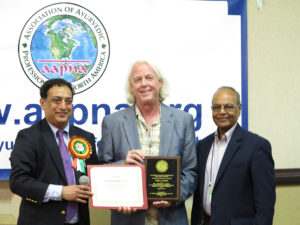
Veda Vyasa Award August 2017

By Anthony B. James DNM(P), ND(T), MD(AM), OMD, Ph.D., RAAP

(Transcribed from a live talk at the Florida Sustainable Living and Perma-culture Conference, Plant City Florida, March 26, 2011)

Welcome! I am so happy that you all have come to share this Sustainable Living and Perma-culture conference with us and explore what sustainability is. There is clearly a lot of passion in this group about what sustainability is and what a sustainable life means. I’ve been going around and talking to lots of beautiful people with really succinct, clear and dynamic visions about what they are trying to achieve. These are big goals!

I am a medical doctor (Monastic Physician), Traditional Naturopathic physician, Oriental Medical Doctor, Vidya (Classical Indian Ayurvedic Physician) and Aachan i.e. traditional master teacher/ professor of Thai Traditional Ayurveda and Yoga Therapy. I am what you think of when you hear about alternative medicine or complementary medicine. What you think of when you hear about wacky medicine that actually has conscience. I am one of those people and I’m proud to be one of those people. I teach medicine, alternative medicine, holistic health, yoga, and everything to do with what it means to try and survive in this world as a healthy balanced person.

At first when I was brainstorming for this talk sustainable living I thought, “well maybe I can talk about 10 principles of health for sustainable living.” The more I thought about it the more I realized “well that’s just crap! I’m not going to be able to do that!” First of all, anybody who knows me knows that one thing I like to do is get behind the curtain and go behind the scenes to get to the real issues because I’m one of those crazy doctors that thinks that in order to balance and achieve optimal health we actually have to go to the origin of the symptoms of our dysfunction. The problem with that is that there are a lot of causes, and some of them are kind of big! There is such a thing as geo-pathic stress, there is such a thing as economic stress, there is such a thing as social stress, there is such a thing as ecological stress, interpersonal stress, toxins, poisons, bacteria, viruses, chemicals and especially radiation right now. Add to that mix of external stress the internal truth that we can be our own worst enemies. Whew!

All these things are contributing to whether or not you feel happy and well right now in this moment. How are we going to achieve that? Even more complex, how are we going to sustain it? Oh my god! That’s a complicated issue. But we have to start somewhere. I have taken some insight from some of the other presentations here and I may not be able to remember the individual names of the presenters because I was so tied up in the really beautiful messages that they speak. I want to always pay respect that I learn from other people, that’s basically how I got here. I’ve been fortunate to have really good role models for sustainable ideas about personal health, wellness and balance and that’s what I’m trying to perpetuate.

Our common survival is linked

So I am Dr. Anthony James and I live here. This is my home, this is my classroom and this is where I teach every day. I want to welcome you to share our space and to bring your energy and contributions on a personal level because I think one of the core concepts that we have to focus on in sustainability is that while we get caught up in the environment, we get caught up in ecology, we get caught up in the external landscape issues, the bottom line is that we are people and we are concerned with ourselves and each other. One of our primary motivations to try and find sustainable solutions to the questions that the world is giving us right now is so we can survive as humans, so we can survive as people! I think one of the most important ideas that we have for sustainability is that we keep reaching toward connectivity with each other and that we don’t let these issues separate us and cause us to fracture and to go off in our own little survival corners with our own little survival strategies. I think our survival as a species or as individuals is absolutely connected to us remaining connected to each other. No matter the kinds of strategies we’re working with, we’ve got to hang! Our survival is dependent on one another. No matter what else I say it’s always going to be in the context of community because the more research I do, the more I realize that I don’t have a snowball’s chance in hell of surviving long term if you personally aren’t going to help me do it. It’s not going to happen! On many simultaneous levels I am completely dependent on my community for survival. No matter what our individual strategy of sustainability we have to keep bringing it back to our family, to our friends, to our community, which are all flesh and blood people. You know, “you prick at them, they doth bleed” kind of thing, that’s the core of it right there.

In this community I know we have some people in our midst that are hardcore sustainable educators and perma-culture educators. But we also have a few people here who don’t really know what the word means. They’re not really sure- What is this sustainability thing? What does that even mean? I am going to start with that and then take my marching orders and try to get through as much of what I have to talk to you about as possible. I know you’re probably not going to remember anything other than the “hello,” however, I also believe that there is such a thing as the Akashic record. I also believe that the ‘stress adaptive human biological transformational machine’ that is sitting in the chair has an absolute perfect ability to mimic, record and adapt to external environments and circumstances. If in fact I can say anything at all that has substance and resonates with any core truth within you then you will have a perfect memory for it and at some point you will recollect it in context, although you may not remember where it came from and I’m OK with that.

What are the principles of sustainable living?

Whatever it take to live a long, healthy, and happy life while respecting and caring for the community of life in which we live.

Working to improve the quality of our life, enabling human beings to realize their full potential for life expression. Building self-confidence and leading lives of dignity that are in and of themselves fulfilling.

-Living in such a way as not to be a burden by creating suffering for ourselves or others while seeking health education, a decent living, political freedom of expression, human rights, and freedom from violence. Sustainable means stepping away consciously from the origin cycle of the creation of suffering for ourselves and for others.

Some of you might recognize that last phrase. It is the last statement in the Metta Sutra Buddhist mantra that is considered to be the most perfect example of Bodhichitta or generating a perfect thought. An example of the most perfect thought a person can have in their head is, “May all beings be happy, may all beings be free from suffering.” Regardless of high, low or middle status, may they be free from suffering. The last sentence in the Metta Sutra says, “May I no longer participate in the origination cycle for the creation of suffering for myself and for other beings.” Essentially those are the principles of sustainable living!

We have the technologies, ideals and philosophies of sustainable living, but how do we get there? How do I no longer participate in the creation cycle of suffering for myself and for other beings, and then how do I explore, experience, and receive the effect of that philosophy? This is where we get into our green technologies. We get into to our democratic social imperatives, our holistic medical paradigms, and we get into our geologic viewpoint of “think global, act local.” These are technologies to actually implement the imperatives.

I am connected to the global paradigm of life

I know that I want to say no to pain, suffering, disorganization, disease, manipulation and coercive ideologies. How do I do that in real terms for myself, my family, my friends, my neighborhood, my community, my town, my county, my state, my country, my nation, my ocean, my sky, my world? How do I do that? Is there a way that I can be functional on all those hierarchies? I do believe that it is possible. Again, I’m another one of these holotropically and holographically minded people and I believe on some level that simultaneously within the context of my humanity and expression of physiology and my DNA that energetically physically, emotionally, and mentally I am connected to the global paradigm of life, I am part of the thin veil or film on the surface of mother earth that we call organic life. On some level, we all serve a function and we’re all interconnected in that way. There is a way to live within the framework of internal and external natural equilibrium’s and sustainability is the key. There is a way to conserve the earth’s vital resources and diversity while promoting our own for our selves, our friends and families, children and children’s children. As the Native Americans say, “we work for the life of seven generations.”

Not being sustainable is counter-intuitive to you own survival

The main reason to be sustainable is that it’s crazy not to be! It’s crazy! If you really understand what’s going on, it would be insane to not be. So, I don’t want to be crazy! It has been part of my path of life to move myself through whatever means was available towards a progression of sanity. I want to be more; I don’t want to be less. Not to be sustainable is counter intuitive to your survival. Thoughts, actions and deeds that are counter intuitive to your survival and those around you are freaking crazy! I don’t want to be crazy and that’s one reason I want to be sustainable.

Planetary die-off cycles of humanity?

Did anyone hear the lecture yesterday on paleo-human life here in the state of Florida? Did you hear the part about periodic human die-off? 12,000 years ago there was proliferation, anthropologically speaking there were millions of humans in our geographic region. Then they just kind of go away and there was a period of time where they weren’t here. Several thousand years later we start to see a continuation but it’s not too good. The technologies aren’t too good and it’s like they lost something. Then they kind of pick it up and they get going again and the arrowheads get a little sharper and a little more precise – and then, they go away for a couple thousand years! Then they come back again.

My understanding is that we are at the precipice of one of those cycles right now and we are arrogant to ignore that these cycles exists.  They have been repeated several times in the last 12,000 or 15,000 years! We will be subject to the consequences if we ignore our external environment and internal environment. Anthropologists say that the disappearance and resurgence of the population is a result of conflict over harvesting of food and inappropriately harvesting of food that led to massive die offs. Spreading of disease without containment strategy also led to massive die-offs. Not understanding the impending doom by noticing the changing planetary conditions led to planetary die off.

Guess what folks? We have all of these things happening right now. The only difference between us and our paleo brothers and sisters is that we have the internet so we have more of a real-time communication network that allows us to address these issues a little bit faster whereas our paleo brothers and sisters were dependent on the “telephone game” to communicate this information. “The sky is falling! The glaciers are coming!” Then a couple of thousand miles away: “I heard something about…there is some guy with snow-cones coming?” “Well I don’t even like snow-cones, so screw that!” They were subject to that problem. We have the possibility of hope because we have a greater ability to communicate. It’s not necessarily technology, but the possibility of simultaneous global communication. Continued in “Thai Yoga Concepts: Sustainable Eating and Sustainable Health Part 2“.

(Sustainable Eating Part 2, 3, 4)

For more information on educational materials by this author see the Yoga Therapy bookstore at BeardedMedia.Com. If you think your friends would benefit from this information please have them subscribe to our newsletter!


For additional Articles on SomaVeda Thai Yoga and Thai Massage Click Here!

To reach us by email Click Here.

Sustainable Eating and Sustainable Health: Part 1 of 4… Copyright© 2011, Anthony B. James, DNM(P), ND(T), MD(AM)  All rights reserved under International and Pan American copyright conventions. World rights reserved. No part of this book may be reproduced or utilized in any form or by any means, electronic or mechanical, including photocopying and recording, or by any information storage and retrieval system, without permission in writing from the publisher. Inquires should be addressed to: Anthony B. James, DNM(P), ND(T), MD(AM), 4715 Brooksville ·  https://thaiyogacenter.com

Seven Unique Characteristics of SomaVeda® Thai Yoga Therapy for Multiple Therapists

Seven Unique Characteristics of SomaVeda® Thai Yoga Therapy for Multiple Therapists

(two to six practitioners)

Thai Yoga Therapy for Multiple Therapists

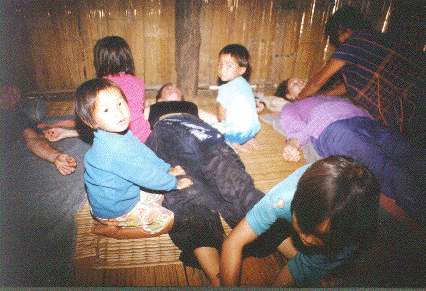
The benefits of SomaVeda® Thai Yoga Therapy for Multiple Therapists and the group dynamic in therapeutic interaction are well known. I would like to bring a higher awareness of this to the SomaVeda® community, specifically, and to the wider community of Yoga and Oriental Bodywork practitioners in general. There is a dynamic quality and energy that is only available when two or more practitioners concentrate on one individual.

As individual practitioners, we are seeking to create promwihan sii, the four divine states of mind: loving kindness, compassion, vicarious joy and equanimity. With two or more practitioners working together, the element of promwihan sii is demonstrated in the atmosphere of community. The client is surrounded with love, compassion, joy, and equanimity. The practitioners also partake in this experience as partners with each other and with the client.

TIGHTENS THE FOCUS
Each practitioner brings his or her full attention to the client. The attention is focused in a more narrow way as the treatment progresses. This narrowing of the work perspective brings more attention to the particular area being worked as well as to the client as a whole.

INFLUENCES THE MATRIX BODY
One of the more subtle and beneficial processes observed in SomaVeda® Thai Yoga is seen when one subtle body or matrix body, interacts with another. The results of this interaction of the subtle energies found in the prana nadis, the meridians, chakras and morphogenic field between client and therapists are quite profound.  The subtle bodies of each person interact with and support one another, the influence of the stronger light body interfering, compounding and supporting the light body of the  weaker. As the practitioners are working in harmony and ‘outnumber’ the client, their healthy bio-energetic fields influence the weaker in a positive way. Time and time again, a client begins to experience shifts of energy and releases before any of the therapists even touch him.  The treatment really begins the moment the group decides to share their vitality and light with their patient.

Sometimes, I think this is where the profound treatment really takes place and the bodywork may well be what we do to keep busy in the meantime.  In other words, the most profound work of the session takes place in a Chi or Prana space. A Chi or Prana space is a space in which the air is vital and filled with Prana or Chi.

LAYING ON OF HANDS
For centuries, the laying on of hands has been a secret teaching in many religions. This healing method is common to many disparate religions and philosophies. There is significant power in having a group ‘lay on hands’ with the expressed intention of supporting a healing miracle. Often, even in the face of extreme odds, healing will manifest spontaneously as a result of the intention alone.  We should not discount this but be aware that particular clients may fall into this category of receptivity. It is important that we are gathered and focused together to touch.

No matter what your level of expertise, lay on with confidence. There is not now nor has there ever been a monopoly on the miracle of true healing. The existence of love and compassion as love’s practical manifestation is beyond reproach. Being available to actually touch the sick person manifests the thought of love into the practical manifestation of love, a compassionate act. This means to me that the universe’s wealth of energy and gift of healing light is not respectful of or limited to one man or class of men or women.  If the universe will work or ever did work through the hands of a man or woman to manifest healing, this opportunity or gift is available to all for the asking now. As one of my favorite teachers, Burmese Bando Grand Master, Dr. U Muang Gyi used to be fond of saying “No nation has a monopoly of the sunlight.

CREATES A SENSE OF COMMUNITY
The interaction between one practitioner and one client is special and profound. The interaction that may take place between multiple therapists and one client is special and utterly distinct. It is a function of community and may only take place with a high level of agreement between everyone involved.  This agreement is between the practitioners as a group and between the client and practitioners.

This is an opportunity for community expression of love and compassion. The result of this play between everyone involved is rewarding. What an incredible opportunity to live the responsibility we have to care for each other. Two, three, even five or six practitioners can work together to weave a web of love and support around the needy or lucky individual receiving treatment. A sense of real connectedness develops and is experienced by all.  This is healthy for client and practitioner alike.

The transmission of loving energy is not only on a vertical axis, it is distributed horizontally as well. This focused moment of care generates ever-widening circles of joy that impact and affect everyone in the vicinity and more. It is not unusual to see spontaneous healing’s occurring on the periphery of the treatment area. It is not uncommon to see healing and resolution of imbalance occurring within the members of the treatment team themselves. The unfolding of the healing encounter may continue long after the moment of being together has lapsed. This is why we say ‘to heal one is to heal all.’

HEIGHTENS INTENTIONALITY AND ACUITY DURING SESSION
When one practitioner works on the client there is a predictable ebb and flow of attention and manifested intention on the part of the practitioner.  More simply stated, sometimes the practitioner is more present with his client than at other times. Sometimes the practitioner is not present with his client at all!  I call this ‘cruise mode’ and I am arguing against ‘cruise mode.’ When real challenges call, only true presence can answer.

With several practitioners on the job, several things take place:

1. The practitioners stimulate each other.  Working together requires more attention and, like magic, more attention is there.

2. The cycle of attention and the ability to remain in a meditative, focused state is different for each practitioner. These cycles of attention and inattention will rarely coincide for all practitioners. One or more of the practitioners will be attentive at all times.

The potential result of this is a completely focused session for the client from beginning to end. The reason I say potential is that there must be a high level of trust and cooperation between the multiple practitioners for this result to take place fully.

LOWERS THE PHYSICAL DEMAND ON EACH INDIVIDUAL PRACTITIONER
With all sharing the work, there is a reduced requirement for physicality on the part of the individual healer or therapist. Each practitioner works with a greater sense of ease.  This virtually eliminates overexertion and burnout.  In fact, most practitioners report that working together in this way is stimulating and refreshing!

CREATES OPPORTUNITY TO WORK WITH DIFFICULT CLIENTS
I first began to research multiple practitioner bodywork while assisting World Class Power lifters at the University of Virginia in 1986.  I was working as a conditioning consultant with strength coach Bill Dunn and then World Champion Lifter John Gamble.  John was 57” across the chest and had 20” arms. He weighed in at 318 pounds with 7 to 11% body fat.

Conventional therapy was out of the question!  I could barely lift an arm much less move his whole body. I recruited some willing students and was able to treat him very nicely. Everyone worked together to move him from asana (posture) to asana, at which point I would apply the specific pressure to release or effect the key points without straining in any way.  If it worked for John, it can work for anyone!

Another example of a physically difficult is a non-ambulatory patient in a wheelchair or bed who is incapable of assisting himself. With several practitioners, there should be no difficulty at all. There are also clients with complicated pathologies or traumas that need consideration. Several caring, professional practitioners are extremely reassuring to the client.

There is a great opportunity in working with one of the most tragic segments of our population, those with AIDS. Many well-meaning therapists are afraid of or thoroughly intimidated by the thought of working with people with HIV.  Correspondingly, the people who would benefit the most from some nurturing bodywork from their community miss out.

By working together as a group of caring therapists supporting one another in the care of the HIV person, everyone benefits.  Being in a difficult place is not so scary when you have reliable support from people you know. If you are afraid of working alone with “difficult clients” for any reason, reach your hand out to someone like you or someone stronger and work together to do what is in your heart to do.  In the end you will be stronger as a therapist.

MASTER MIND THERAPY
The group mind of the group therapist can be quite insightful. The several therapists take on a new identity, that of the group master mind, sharing the qualities of all.  With practice, the group takes on the appearance and attention of a single master therapist with infinite tools available to bring about the possible healing of the client.

SomaVeda® Thai Yoga for Multiple Therapists and the group dynamic therapeutic interaction has the possibility of opening doors to healing which conventional, one on one, type of sessions can not. The experience and possibility of expanded healing are as good for the group as for the client or receiver. For example, one additional variation is for the group to rotate in, to have each member of the healing team to take turns being both a giver and or a receiver in turn!  Step up your communication and organize a partner approach to your next session and experience for your self what this wonderful SomaVeda™ Thai Yoga variation has to offer.

The multiple therapists style of Thai yoga is a standard part of the curriculum of the SomaVeda® Thai Yoga (Traditional Thai Massage)(Thai Yoga Massage) Practitioner Certification Program. Thai program is hosted four times a year at the Thai Yoga Center in Brooksville, Florida. For details on the CTP and other fine educational offering at the Thai Yoga Center Click Here!

But for now, enjoy the Thai Yoga Multiple Therapists video, be inspired to explore and expand your practice!

For SomaVeda Thai Yoga Articles Main Page Click Here!

To see the SomaVeda™ Thai Yoga Multiple Therapists application for the standard Massage, Massage Therapy table:

1) Table Thai Slide Show #1

1) Table Thai Slide Show #2

1) Table Thai Slide Show #3

For information on SomaVeda® Thai Yoga Practitioner Certification Program Click Here!

To reach us by email Click Here.

Ayurveda of Thailand Wins 2017 eLit Award

Ayurveda of Thailand Wins 2017 eLit Award

News Update! July 2017:  Just awarded the 2017 Silver Medal Winner in the eLit Awards (independent publishing) digital publishing excellence in the “New Age/ Mind-Body-Spirit award category!


Ayurveda of Thailand Wins 2017 eLit Award

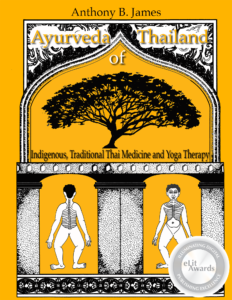
Ayurveda of Thailand: Indigenous Traditional Thai Medicine and Yoga Therapy

PRESS RELEASE

New comprehensive textbook on the Ayurveda and Thai Yoga of Thailand!
Brooksville, FL, Release Date: 09/05/2016 –

Ayurveda of Thailand wins eLit Silver Medal 2017


Ayurveda of Thailand: Indigenous Traditional Thai Medicine and Thai Yoga are part of what makes Thailand, Thailand. The Royal ( Court or “Southern” Style) is the most classical form.

The book provides clear and concise instructions and details for the practice in a clinical setting. Over 160 photo and graphic illustrations present each traditional application in a logical format.

Readers will especially appreciate the detailed and well researched history and medical anthropology of Thailand’s great contribution to the world heritage of indigenous, traditional medicine systems. Thai Yoga Therapy is on par with Traditional Chinese Medicine and others.

It has become the nucleus of a new lifestyle and right livelihood for the thousands of US and Thai students, practitioners and teachers. Indigenous, Traditional Thai Massage (Indigenous Thai Yoga Therapy), also called “Ryksaa Thang Nuad Phaen Boran Thai” or the “ancient Chirothesia (Yoga Therapy) or hands-on healing” of Thailand, is born of a long tradition.

This unique system of indigenous, traditional, natural medicine and Yoga therapy finds it’s ancient roots first in the traditions of classical Ayurveda as far back as the 5th century BCE. Subsequently, the Vedic health and medical practices eventually became common practice in SE Asia. Burma (Myanmar) and Thailand were heavily influenced by succeeding generations of Buddhist influence, philosophy and practice. Some form of this traditional medicine has been taught and practiced in various locations for about 2500 years.

Two ways to get the book: Ayurveda of Thailand: Indigenous Traditional Thai Medicine and Yoga Therapy

Trade Paperback: Only $19.95: To review or order the paperback order on Amazon CLICK HERE!

Kindle Edition: Only $9.95: To review or order the Kindle version CLICK HERE!

News Update! July 2017:  Just awarded the 2017 Silver Medal Winner in the eLit Awards (independent publishing) digital publishing excellence in the “New Age/ Mind-Body-Spirit award category!


AUTHOR BIO:
The outstanding credits of Anthony B. James DNM(P), ND(T, MD(AM), DPHC(h.c.), OMD, PhD, RAAP, SMOKH include: Author, lecturer, Aachan and Master of Indigenous,Traditional Thai Medicine and Indigenous, Traditional Thai Massage, Traditional Naturopath, Medical Doctor(AM) specializing in Pastoral, Indigenous, Traditional, Natural, Native American and alternative medicine, Registered Ayurveda Clinician and Doctor of Philosophy in Indigenous Medicine.

Over 20,000 students have gone through his SomaVeda Integrated Traditional Therapies® educational programs since 1984. Honored by Royal Thai Government several times,TAT, Receiver of the Friend of Thailand award for Thai Medicine, Bangkok, Aachan and/or Master teacher and FIRST Westerner authorized to share Traditional Thai Medical Massage (Thai Yoga Therapy) in the west.

Ayurveda and Thai Yoga, Religious Therapeutics Theory and Practice

PRESS RELEASE! New Ayurveda Text Book!

Ayurveda and Thai Yoga Religious Therapeutics Theory and Practice


Ayurveda and Thai Yoga, Religious Therapeutics Theory and Practice

By Dr. Anthony B. James DNM(C), ND(T), MD(AM), DOM(C), DPHC(h.c.), PhD, M.Sc., RAAP, SMOKH

Ayurveda, Indigenous Traditional Thai Medicine and Yoga Therapy is strongly based on Classical Indian Ayurveda. The Indigenous medicine systems of India (Ayurveda, Yoga) have been practiced in one form or another in the land we call Thailand longer than the land has been called Thailand.

Ayurveda of Thailand and Thai Yoga originated in the pre-Thai dawn of the great Indian vassal kingdoms of the Khymer and Mon civilizations and in the Theraveda Buddhist medicine practices found within the orders of monks and nuns (the Sangha). The term “Ayurveda” combines the Sanskrit words ayur (life) and veda (science or knowledge).

Ayurvedic medicine, originating in India, is one of the oldest systems of indigenous, traditional medicine in the world. Many Ayurvedic practices predate written records and were handed down by word of mouth. The ancient Thai people adopted these ancient traditions and over time adapted them to their way of life. Ayurveda of India, Khymer and Mon cultures became” Ayurveda of Thailand”!.

We now have practical means to be able to bring this medicine to our community. Life cycles out harmony with nature keep people from experiencing life in a full and productive way. These healing practices are seen as opportunities to learn a balanced way of living with nature. The nature that is outside of ourselves and the nature that is within. These remarkable teachings regarding restoration and maintenance of life have now been passed on to this generation. Thai Ayurveda/ ITTM/ Yoga Therapy incorporates elements of counseling,energy balancing, sacred nutrition and plant based diet, mindfulness, gentle rocking, deep stretching and rhythmic compression to create a singular healing experience. This work, as it brings fundamental elements and energy into harmony; creates wholeness of mind, body and spirit, in the client and the practitioner as well.

Add this Ayurveda textbook to your library today!

  1. Ayurveda and Thai Yoga, Religious Therapeutics Theory and Practice (Paperback)
  2. Ayurveda and Thai Yoga, Religious Therapeutics Theory and Practice (Kindle ebook version)

Ayurveda Perspective on Hypothyroidism

Ayurveda Perspective on Hypothyroidism

by Scott Gerson, M.D., Ph.D. (Ayu), Medical Director, The Gerson Institute of Ayurvedic Medicine

The thyroid gland is an endocrine gland located in the neck below the thyroid cartilage (which forms the laryngeal prominence, or “Adam’s apple”). The isthmus (the bridge between the two lobes of the thyroid) is located inferior to the cricoid cartilage.

The thyroid gland controls how efficiently the body produces and utilizes energy, and affects almost every tissue and organ in the body. The only exceptions are the brain, ovaries, testes, spleen, and the thyroid gland itself. It acts by producing thyroid hormones, the principal ones being triiodothyronine (T3) and thyroxine (T4). T3 and T4 are synthesized from both iodine and tyrosine. The thyroid also produces calcitonin, which plays a role in calcium homeostasis.

Hypothyroidism is a condition in which the thyroid gland does not produce a sufficient amount of the thyroid hormones thyroxine (T4) and triiodothyronine (T3). It is estimated to affect between 3.8-4.6% of the general population. Approximately 0.3% of the general American population have overt hypothyroidism, and 4.3% have subclinical hypothyroidism. Globally, iodine deficiency is the most common cause of hypothyroidism. In areas where dietary iodine is sufficient, hypothyroidism is most commonly caused by Hashimoto’s thyroiditis. It can also (rarely) be caused by post-partum thyroid inflammation, certain medications, congenital abnormalities (failure of the thyroid gland to develop), or stress.

Stress and Hypothyroidism

In fact, stress is known to be a significant contributor to thyroid dysfunction. Whenever you experience stress, your adrenal glands produce cortisol. This is an evolutionary protective mechanism that originally developed as a response to physical threats. It creates the “fight or flight” response and once the physical threat is gone, cortisol levels go back to their normal levels. Its primary functions are to:

  • increase blood sugar through gluconeogenesis in the liver • increase blood sugar through the breakdown of glycogen to glucose • raise the blood pressure   • suppress inflammation • suppress the immune system

Elevated cortisol is intended for short term stressful events. However unfortunately, your body does not know the difference between an sudden attack by a dinosaur and raising twin two-year olds. It is the duration and accumulation of stress and not the type of stress that causes high levels of cortisol.

Every cell in the body has receptors for both thyroid hormone and cortisol. Cortisol acts synergistically with thyroid hormone at the epigenetic level. Normal levels of cortisol (neither too much nor too little) need to be present bound to its receptors for optimal function of not only the thyroid gland itself but for every tissue in the body. Too much cortisol causes the tissues to no longer respond to the thyroid hormone signal. This is known as thyroid resistance, meaning that thyroid hormone levels can be normal, but tissues fail to respond as efficiently to the thyroid signal. It can cause TSH levels to be elevated while T4 and T3 are within the normal range.

Excess cortisol has an adverse direct affect on thyroid function. It inhibits deiodinase (the enzyme responsible for the conversion of T4 into T3 in the body tissues) and also leads to an increased risk of Hashimotos thyroiditis (thyroid autoimmune disease). The latter effect is the result of cortisol causing an abnormal the ratio of T1 and T2 lymphocytes. A shift toward T1 may be associated with Hashimotos.

Symptoms

The symptoms of hypothyroidism are quite variable, depending on the severity of the hormone deficiency and of course one’s constitutional make-up. But in most cases, symptoms tend to develop slowly, often over a number of years. They typically include any or all of the following:

Chronic fatigue, weight gain, depression, low blood pressure, sensitivity to heat and cold, paresthesias, bradycardia, elevated LDL- cholesterol, reactive hypoglycemia, hoarseness, constipation, headache, muscle weakness, joint stiffness, swollen face, menorrhagia (heavy and prolonged menstruation), cramps, memory loss, visual problems, infertility and hair loss.

Ayurvedic Perspective on Hypothyroidism

Galaganda

There is no direct mention of the thyroid gland in Ayurveda. But a disease by the name galaganda is mentioned in various samhitas. The earliest description of neck swelling is found in the atharvaveda by the name apachi (a non-suppurative swelling in the neck, axilla, or groin). Charaka first described the disease as one of the 20 varieties of sleshma (kaphaja) vikaras (disease). Sushruta explicitly wrote that out of seven layers of the skin, the sixth layer, Rohini, is galaganda rogadhistana-(Su.Sa.IV/4). In the nidana sthana he describes galaganda as two encapsulated small or big swellings in the anterior angle of the neck, which hang like a scrotum (Su.Ni.XI), whereas Charaka describes galaganda as solitary swelling (Ch.Ch.XI).

The etiological factors in galaganda include climatic conditions, water supply, dietary conditions and other surroundings. Sushruta stated that rivers flowing towards east might give rise to the occurrence of galaganda. Bhela states that galaganda is more common in prachya desa (eastern part) of the country. Harita samhitakara described the role of dustambu (contaminated water) in the precipitation of galaganda. Kashyapa samhita says that any part of the country which is cold, damp, with densely grown long trees, water stagnation and heavy rains may promote the development of galaganda.

From the above descriptions it is tempting to associate galaganda can be with goiter (abnormal swelling of the thyroid gland) or some type of neck tumor, where thyroid functions may or may not be compromised. But hypothyroidism is not just a localized disease. It has many symptoms related to many systems of the body. None of these manifestations are mentioned in the ancient texts. Thus it is probably inaccurate to draw a parallel between hypothyroidism and galaganda.

Ayurvedic Treatment

According to modern Ayurvedic therapeutic science, a decrease or increase in the normal working of thyroid gland results in the ailments of hypothyroidism or hyperthyroidism, respectively. Like all nija rogas (internally caused diseases), the root cause of hypothyroidism is a disequilibrium of the doshas. There is in general vitiation in the Kapha dosha and Pitta dosha (water and fire body humors).  Ayurveda teaches that thyroid disease is affected by diet and lifestyle discrepancies which further promote the doshic imbalance.

Diseases are classified in Ayurveda as either Sukhasadhya, Kruchrasadhya, Yapya or Asadhya. Sukhasadhya diseases, can be easily cured. Kruchrasadhya diseases are difficult to cure. Yapya diseases recur when the treatment is stopped and Asadhya signifies those diseases that are incurable. Ayurveda considers most forms of hypothyroidism a yapya disease.

Thyroid Therapy

Ayurveda therapy for thyroid disease is a holistic and supportive therapy that aims to correct the doshic imbalance and hence the flawed function of the thyroid gland. Therapy includes the recommendation of herbal medicines principally for dosha balance and to some extent specifically to promote thyroid function, dietary guidance, and lifestyle recommendations.

Thyroid Medicines

No dosages or methods of preparation are given to emphasize the absolute requirement for an Ayurvedic physician to prescribe these medicines.

Single medicines include: Kanchanara leaves, Guggulu oleoresin, Ashwagandha root, Brahmi leaves, Punarnava leaves.

Compound medicines include Kanchanar Guggulu, Punarnava mandoor*, Ashwagandharishta, Amritadhaya taila and Mahayogaraj guggulu**.

All medicines for hypothyroidism need to be taken under the supervision of an experienced Ayurvedic physician (Vaidya). Also, as these thyroid medicines help in regulating metabolism as well as detoxifying the body, you may need to increase your water intake and include a bland diet along with taking medicines meant for thyroid balancing.

* contains ferric oxide (iron) and is used only if there is accompanying anemia. **contains mercuric sulfide, tin oxide, ferric oxide, ferrous silicate, and silver oxide.

Hypothyroid Diet and Lifestyle Guidance

  • Assuming there is no food intolerance or lactase deficiency one can consume milk and milk products. Also rice, barley, green grams, Bengalgram (chaana dal), sugarcane juice, cucumber and fruits and vegetables which are pittakapha ahara (reduce both pitta and kapha, (see diets on our website)
  • Restrict the salty and sour tastes in your diet.
  • Ayurveda acknowledges the benefit of specific Yoga asanas and pranayama (breathing techniques) in the management of hypothyroidism. These asanas include:

Yogamudrasana Yoganidrasana Halasana Sarvangasana Suryanamaskar  Suptavajrasana Matasyasasna

  • Pranayama techniques of Jalandhar bhanda and Ujjayi Pranayaam

Iodine is a controversial subject for hypothyroid patients. One of the most classic signs of iodine deficiency is an enlarged thyroid gland and goiter: conversely, people with Hashimoto’s disease often develop goiter that can be aggravated by supplementing with additional iodine, especially in large doses.

Iodine is found in shellfish, seaweed, deep-water fish and certain vegetables, including: garlic, chard, spinach, and mustard and turnip greens, lima beans, sesame seeds, and soybeans. The iodine content in food does not seem to aggravate a Hashimoto’s thyroid in the same way as it does when administered in supplements, but it is still prudent not to consume these items in large quantities.

Selenium deficiency is also a preventable environmental factor in Hashimoto’s disease. The recommended daily allowance of selenium is normally 55 mcg (micrograms), but for Hashimoto’s patients it is reasonable to increase this to 200 mcg daily either through the diet or supplementation. Selenium foods (mcg/per serving) include: brazil nuts (540!), most salt-water fish (50-90), shellfish (50-60), mushrooms (15-20), meats (20-30), poultry (30), eggs (10), and whole grains (20-25).

As we all are constitutionally, metabolically, and genetically different, with we will respond to standard Ayurvedic treatments in idiosyncratic ways. Therefore the therapeutic approach to any disease or condition is always individually formulated.


Reprinted with authors permission.

Read original Article Here!

Angels Speak by Anthony B. James

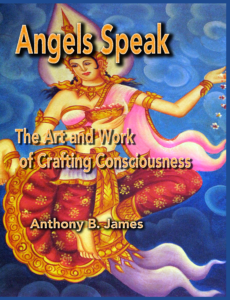
Angels Speak, The Art and Work of Crafting Consciousness

New Book Angels Speak by Anthony B. James


This Paperback edition is a practical guide to personal and self work. This book is based entirely on the original workbook, first published in 1994 by Anthony B. James as a personal workbook for himself and his Somaveda Integrated Traditional Therapies® Thai Yoga students. The original short workbook, composed of a list of useful aphorisms, maxims and statements allegedly attributed to conscious beings, is herein discussed and elaborated on in detail. The book is based entirely on a series of 28 lectures given by Dr. J between September and November 2011. The Trade Paperback edition contain all of the text found previously in the Kindle editions Volume 1 & 2.

Now Available on Amazon.Com: Click Here to view or order.


  • Series: Angels Speak
  • Paperback: 248 pages
  • Publisher: Meta Journal Press (March 20, 2017)
  • Language: English
  • ISBN-10: 1886338175
  • ISBN-13: 978-1886338173
  • Product Dimensions: 8.5 x 0.6 x 11 inches


Amazing Thai Yoga Therapy for the Hands!

Amazing Thai Yoga Therapy for the Hands: Reusi Dottan Based Restorative and Regenerative Yoga for Hands, Shoulders and Heart

Amazing Thai Yoga therapy for the hands

Ayurveda and Yoga Therapy have been practiced as a vital part of Thailand’s indigenous culture for thousands of Years. Thai Reishi Yoga or Reusi Dottan provide the origin for the Thai Yoga therapy for the hands. This is true Hand Yoga!

Read more

What is SomaVeda Thai Yoga Ayurveda Book now Available

What is SomaVeda Thai Yoga Ayurveda? : 49 Systems of Self Expression and Healing

PRESS RELEASE

New comprehensive textbook on the SomaVeda® Integrated Traditional Therapies® style/ system of indigenous, traditional medicine based on Ayurveda and Thai Yoga of Thailand!
Brooksville, FL, Release Date: 11/07/2016 –

What is SomaVeda Thai Yoga Ayurveda?

SomaVeda Integrated Traditional Therapies® is a system of religious therapeutics, wellness, health, healing, way of life and martial arts. It is based on the integration of indigenous, traditional therapeutic and spiritually based healing sciences and systems of both Eastern and Western origin.

The ancient and modern systems which form the basis of SomaVeda® are several different countries and cultures such as Thailand, India, China, Tibet, Philippines, Indonesia, Malaysia, Japan and the Americas. The most important category of contribution to SomaVeda® is that of The Indigenous Traditional Thai Medicine (Ayurveda of Thailand) and Indigenous Traditional Thai Yoga and Medical Massage from the Buddhai Sawan, Buntautuk, Wat Po, Anantasuk and Lek Chaiya Jap Sen traditional schools. In particular, the basis of primary techniques are Royal and Northern branches of Indigenous Traditional Thai Medicine (ITTM/ TTM).

The book provides clear and concise insight into What SomaVeda® style Indigenous Traditional Thai Medicine and Ayurveda is and the variety of possibilities of what it can be!

Readers will especially appreciate the detailed explanations for the principles, theories behind the practice. There is much confusion as to what exactly Indigenous Thai Yoga (sometimes referred to as Traditional Thai Massage) is. This book dispells the myths and inaccuracies. Once you read it you will see what Indigenous Thai Yoga & Ayurveda are a comprehensive holistic medical practice on par with any other traditional system of medicine such as Traditional Chinese Medicine and or Classical Ayurveda.

SomaVeda® style Indigenous Thai Yoga has become the nucleus of a new lifestyle and right livelihood for the thousands of US and Thai students, practitioners and teachers. Indigenous, Traditional Thai Massage (Indigenous Thai Yoga Therapy), also called “Ryksaa Thang Nuad Phaen Boran Thai” or the “ancient Chirothesia (Yoga Therapy) or hands-on healing” of Thailand, is born of a long tradition.

This unique system of indigenous, traditional, natural medicine and Yoga therapy finds it’s ancient roots first in the traditions of classical Ayurveda as far back as the 5th century BCE. Subsequently, the Vedic health and medical practices eventually became common practice in SE Asia. Burma (Myanmar) and Thailand were heavily influenced by succeeding generations of Buddhist influence, philosophy and practice. Some form of this traditional medicine has been taught and practiced in various locations for about 2500 years.

The founder and lead teacher of the SomaVeda Integrated Traditional Therapies® Indigenous Thai Yoga Ayurveda system Dr. Anthony B. James, explains the incredible possibilities of what SomaVeda® is in his own words.

Two ways to get the book: Ayurveda of Thailand: Indigenous Traditional Thai Medicine and Yoga Therapy

Trade Paperback: Only $14.95: To review or order the paperback order on Amazon CLICK HERE!

Kindle Edition: Only $9.95: To review or order the Kindle version CLICK HERE!

AUTHOR BIO:
The outstanding credits of Anthony B. James DNM(P), ND(T, MD(AM), DPHC(h.c.),OMD, PhD,RAAP, SMOKH include: Author, lecturer, Aachan and Master of Indigenous,Traditional Thai Medicine and Indigenous, Traditional Thai Massage, Traditional Naturopath, Medical Doctor(AM) specializing in Pastoral, Indigenous, Traditional, Natural, Native American and alternative medicine, Registered Ayurveda Clinician and Doctor of Philosophy in Indigenous Medicine.

Over 20,000 students have gone through his SomaVeda Integrated Traditional Therapies® educational programs since 1984. Honored by Royal Thai Government several times,TAT, Receiver of the Friend of Thailand award for Thai Medicine, Bangkok, Aachan and/or Master teacher and FIRST Westerner authorized to share Indigenous, Traditional Thai Medicine (Indigenous Thai Yoga Therapy & Thai Ayurveda) in the west.

Ayurveda of Thailand Book now Available

Ayurveda of Thailand: Indigenous Traditional Thai Medicine and Yoga Therapy

PRESS RELEASE

New comprehensive textbook on the Ayurveda and Thai Yoga of Thailand!
Brooksville, FL, Release Date: 09/05/2016 –

Ayurveda of Thailand

Ayurveda of Thailand: Indigenous Traditional Thai Medicine and Thai Yoga are part of what makes Thailand, Thailand. The Royal ( Court or “Southern” Style) is the most classical form.

The book provides clear and concise instructions and details for the practice in a clinical setting. Over 160 photo and graphic illustrations present each traditional application in a logical format.

Readers will especially appreciate the detailed and well researched history and medical anthropology of Thailand’s great contribution to the world heritage of indigenous, traditional medicine systems. Thai Yoga Therapy is on par with Traditional Chinese Medicine and others.

It has become the nucleus of a new lifestyle and right livelihood for the thousands of US and Thai students, practitioners and teachers. Indigenous, Traditional Thai Massage (Indigenous Thai Yoga Therapy), also called “Ryksaa Thang Nuad Phaen Boran Thai” or the “ancient Chirothesia (Yoga Therapy) or hands-on healing” of Thailand, is born of a long tradition.

This unique system of indigenous, traditional, natural medicine and Yoga therapy finds it’s ancient roots first in the traditions of classical Ayurveda as far back as the 5th century BCE. Subsequently, the Vedic health and medical practices eventually became common practice in SE Asia. Burma (Myanmar) and Thailand were heavily influenced by succeeding generations of Buddhist influence, philosophy and practice. Some form of this traditional medicine has been taught and practiced in various locations for about 2500 years.

Two ways to get the book: Ayurveda of Thailand: Indigenous Traditional Thai Medicine and Yoga Therapy

Trade Paperback: Only $19.95: To review or order the paperback order on Amazon CLICK HERE!

Kindle Edition: Only $9.95: To review or order the Kindle version CLICK HERE!


News Update! July 2017:  Just awarded the 2017 Silver Medal Winner in the eLit Awards (independent publishing) digital publishing excellence in the “New Age/ Mind-Body-Spirit award category!

eLit Silver Medal Award 2017


AUTHOR BIO:
The outstanding credits of Anthony B. James DNM(P), ND(T, MD(AM), DPHC(h.c.),OMD, PhD,RAC,SMOKH include: Author, lecturer, Aachan and Master of Indigenous,Traditional Thai Medicine and Indigenous, Traditional Thai Massage, Traditional Naturopath, Medical Doctor(AM) specializing in Pastoral, Indigenous, Traditional, Natural, Native American and alternative medicine, Registered Ayurveda Clinician and Doctor of Philosophy in Indigenous Medicine.

Over 20,000 students have gone through his SomaVeda Integrated Traditional Therapies® educational programs since 1984. Honored by Royal Thai Government several times,TAT, Receiver of the Friend of Thailand award for Thai Medicine, Bangkok, Aachan and/or Master teacher and FIRST Westerner authorized to share Traditional Thai Medical Massage (Thai Yoga Therapy) in the west.

SomaVeda® Bio-Tapp/ EFT and Thai Yoga Part 1

cropped-SomaVeda_Logo_BW_3-1.pngSomaVeda® Bio-Tapp/ EFT and Thai Yoga Part 1

SomaVeda® Bio-Tapp/ EFT and Thai Yoga Part 1

Thai Yoga Therapy Role in Cancer Palliation

 I was first introduced to the concept of “tapping” to balance energy in the meridians by late Grand Master of Thai Medicine, Aachan, Moh Boontum Kitniwan in 1988. The technique in Thai is referred to as “Tok Sen” (Hit the Line). In 1991, I was introduced to a Japanese variation by master of Shiatsu, Toshiko Phipps.

The initial techniques Toshi introduced to me were performed with a little wooden hammer and a wooden probe (Manaka Hammer). We would do a pulse and or Hara assessment to determine which meridians and corresponding points would need balancing and then apply the probe and tapp it with the hammer. Toshi also related to me that it was her understanding that originally the technique was part of Tibetan and Chinese acupuncture. My feeling and understanding of what these various masters told me is that the use is quite ancient and was practiced in some form or another throughout Asia and Southeast Asia.

Read more