Thai Yoga Concepts: Sustainable Eating and Sustainable Health: Part 2 of 4

Thai Yoga Concepts: Sustainable Eating and Sustainable Health: Part 2 of 4

UTTS issues Dr. Anthony James Lifetime Credentials

By Dr. Anthony B. James DNM(P), ND(T), MD(AM), SMOKH

(Re-Post: Transcribed from a live talk at the Florida Sustainable Living and Perma-culture Conference, Plant City Florida, March 26, 2011)

An amazing possibility is occurring right now!

Right now this second there are groups just like the group in this room who are having the exact same conversation about exactly the same topics in about a hundred different locations around the planet! Right now this minute! That’s never happened before, so that’s our possibility of hope. But what are we going to do with it? That’s the question.

Its one thing to philosophically get it and it’s another thing to have practical solutions. I’m going to go through some practical solutions. We’re ahead of the curb, right? I’m a hopeful guy, I actually do believe that there is hope that we can come out of this and we can actually survive in a good way. That is what I work for.

What’s the core issue with sustainability?

I want to focus on what I think is really the fundamental issue in sustainable eating and health. Pardon me if this is elementary because I know there are some experts in the room, but I’m just speaking across the board.

I believe the number one issue is food. I have all these doctor technologies and no matter what I learn I keep coming back food as the number one issue. It’s the one issue above all others that we actually have the capacity to substantially control. So because we have the ability to have some input in relation to what we eat, where it comes from and what the impact is of our food on ourselves and on our environment, it’s one of the places where we can add our influence, both internally and externally. That’s why I choose to focus on food. I’m going to keep coming at it from a health point of view because I just can’t help it!

Whatever it takes to live a long and happy life!

Hippocrates said “let they food be thy medicine and thy medicine be thy food.” So what is medicine? There are a lot of misconceptions about what medicine is. The definition of medicine is same as the definition of sustainable living! There’s a source of conflict and confusion right there. We compartmentalize and create distinctions and say, “medicine is over here, and food is over here.” There is some crossover but it is a misconception and a misperception that they are unrelated. Let’s go back to the definition of sustainable living: Whatever it takes to live a long healthy and happy life, while respecting and caring for the community of life in which we live. Well guess what? That’s the definition of medicine too: whatever it takes to live a long and happy life. Let food be your medicine, let food be part of your strategy of whatever it takes. Let whatever it takes to be happy be your food, so let’s stop eating things that don’t make us happy. That’s a real simple way to say it isn’t it?

Stay away from the dominant cultures medical system

Statistically speaking, other then changing your eating habits the number one thing you can do to prolong your life and guarantee that you’ll have a long healthy life in this country (I’m not necessarily talking about the whole world) is to do whatever it takes to stay out of hospitals and to stay out of the conventional medical system.

The current system has failed. Where is the outrage?

I’m a pastoral medical doctor so I get a copy of JAMA and the different journals that are published under the banner of JAMA. According to JAMA, give or take, some 380,000 people a year die directly from medical malpractice. I think this is a conservative estimate because it might be a little self-incriminating. We drive down the highway and see billboards of the sheriff with the reflective glasses and the words “drive drunk and pay the price.” We see MADD billboards with the cameo of the teenage son or daughter who will not live a long and happy life because of an incursion due to drunk driving. Virtually every city in the country including has federal, state and local funding of millions of dollars for the formation of DUI task forces, random roadblocks, and breathalyzers. There have been 12,000 constructed expansions of prisons in the US just to take the additional prisoner loads of DUI’s into the jail system and the legal system. There are about 48,000 deaths a year on average as a result of drunk driving.

It gets worse

I’m not saying that I support drunk driving, but compare that to 380,000 deaths a year due to medical malpractice. When is the last time you were driving down the road and you saw a billboard with a man or a woman in a white jacket with a stethoscope hanging around their neck with a “have you seen this person? Call “1-800-STOPDOC” to report that you have seen one of these people wanted for murder, mayhem, malpractice and for just damn not trying to help you and being part of a system that kills you at 4, 5 and 6 times the annual rate of drunk drivers.” That’s not the bad news; it gets worse. I’m not quoting the national inquirer, although technically it might be more accurate and I’m sorry to say that.

According to these medical statistics, another 400,000 die simply from unsuccessful procedures that were properly applied. In other words, it wasn’t malpractice. They did exactly what was the standard medical practice according to standard medical disciplines, according to standard medical procedures. 400,000 people died from operations that were considered a complete success. They did everything right and the patient died. These numbers are per year, not in the last 100 years, but the annual numbers! 400,000 people died from side effects.

There are no side effects!

There is no such thing as a side effect! How many people have heard that there is such a thing as a drug side effect? You have been misled and that is a programming issue and propaganda issue because there are actually NO side effects of any known prescription drug or procedure. There are secondary effects that we don’t want, which are less popular. You can get a copy of a Merck Manual or the Physician’s Desk Reference to Drugs and for every single drug there will be the primary benefit listed and immediately there will be up to 92 different secondary effects. For marketing, they are referred to as “side effects” as if they are optional.

A chemical doesn’t know what a side-effect is

A relative of mine has an advanced degree in pharmacology. He would say that it is all chemistry- you ingest the chemical and get the effect. The chemical doesn’t know primary from secondary. The chemical doesn’t know what a side effect is, it just does what it does. For many of these drugs there are up to 92 side effects and I’ve even seen a drug that has more than that. Generally there are between 70 and 90 secondary effects and about a third of them are fatal. That’s how you get these 400,000 deaths. We need to be logical, so how do we get there? That’s not the malpractice, that’s when everybody agreed that it was appropriate for you and it still caused you harm.

The source of your primary health care has to be your eating habits

So what is the alternative? If we are not going to rely on the conventional medical system as our primary health care, then “let food be your medicine and medicine be your food.” The source of your primary health care has to be your eating habits. You have no choice! There is no other alternative. I know some of you that might be offended to even hear me say so, but I am giving you my professional medical advice. As you would with any doctor, or perhaps as you should do with any doctor, take my advise or leave it.

Health is a fluid balance between toxicity and deficiency

Traditional Chinese Medicine theory postulates that health is a dynamic equilibrium between internal and external pernicious influences. Health is a constant balancing act. This could be anything that reduces our capacity to live the full natural possibility of life or whatever life as a human being on this planet could be. That includes everything from the environment and landscape, both internal and external. Internal pernicious influences are what take place when harmful influences bridge the world-skin barrier and become part of us causing changes within us. This includes mental and emotional psychology, the ecology of our inner world and how we handle toxins, virus, bacteria, and cancers. The external landscape is everything outside of your skin that has the ability to affect your longevity, health and well being.

We can also talk about the 5 elements because we have fire, earth, metal, water, and wood, or in Chinese medicine and Ayurveda we have ether, air, fire, water and earth. Any way you slice it, whatever is out there is part of us and then we have this really funny philosophy that says that we are also part of everything that’s out there.

We are children of the soil

So health is about managing this equilibrium between the inside and the outside, the two landscapes. Sometimes we use the word soil, and I know perma-culture people really want to talk about the soil a lot; in fact, that’s one reason I love them! The first book I ever read on the soil was Secrets of the Soil and I developed this whole different idea about the ground and what the nature of the soil was. I learned that it was alive and there was energy in it and that it was communicating to me!

Of course I knew from my bible lessons as a child that eventually I would become the soil. I thought, “Whoa! Dirt to dirt! So what you’re saying is that I’m actually a child of the soil and that I am soil in a flesh bag walking around for a while and then I go back to my origin which is the soil?” Somewhere I had lost the connection or the conscious knowledge that I was really just a bag of dirt walking around. What is my function then, as mobile dirt?

I realized that part of the reason why we are so unhealthy is because we have been separated from our proper relationship to our mother ecology, which of course is the soil. Now that we are ego-encapsulated soil flesh bags we think that we are separate and somehow isolated from the total environment that surrounds us. We pretend and we act and we create structures that are based on this false idea that we are somehow separate from the soil. We no longer rely on the soil as our nutrient base and we no longer honor the fact that its part of our lifestyle to sustain the soil.

What is my path in life?

When we say, “Oh, I’m looking for my path,” we are really wondering, “What is the purpose of a human being?” A human bring is a mobile expression of the vital life of the planet. There are probably lots of purposes for human beings but part of the reason why we were given legs in the first place was to act as landscapers, caretakers, moderators and enhancers of the vital communication capacity of the earth that is expressed in the life of the soil. It is the proper time to rejoin the community of other sentient beings and the earth which all return their essence to the dirt. You might say, “Oh my god, that’s just crazy!” You know what? If you start to think about it like that for a minute, I think some things might come clear.

We are not that special

Like the Native Americans say, “What is a human being? An upright two-legged being.” No different than any other! No different than the four-legged, no different from the ones with wings, no different than the ones that swim. No different than the ones who crawl through the earth and no different than the microbes. Guess what? Microbes are sentient. How about that? Bacteria is sentient, virus is sentient. Like the Dalai Llama says, “ALL LIVING BEINGS ARE SENTIENT.” We pray for all sentient beings, so when we are praying for all sentient beings we pray for the virus and the bacteria.

Sustainable Eating Part 1, Sustainable Eating Part 2, Sustainable Eating Part 3, Sustainable Eating Part 4


Learn SomaVeda® Thai Yoga!

Disclaimer:
All Information is provided for educational purposes only and not intended to be used for any therapeutic purpose, neither is it intended to diagnose, prevent, treat or cure any disease. Please consult a health care professional for diagnosis and treatment of medical conditions. While all attempts have been made to ensure the accuracy of this information. The author and ThaiYogaCenter.Com does not accept any responsibility for any errors or omissions.

Copyright© 2011, Dr. Anthony B. James.  All rights reserved under International and Pan American copyright conventions. World rights reserved. No part of this book may be reproduced or utilized in any form or by any means, electronic or mechanical, including photocopying and recording, or by any information storage and retrieval system, without permission in writing from the publisher. Inquires should be addressed to: Dr. Anthony B. James https://thaiyogacenter.com

Thai Yoga Concepts: Sustainable Eating and Sustainable Health: Part 1 of 4

Thai Yoga Concepts: Sustainable Eating and Sustainable Health: Part 1 of 4

Veda Vyasa Award August 2017

By Anthony B. James DNM(P), ND(T), MD(AM), OMD, Ph.D., RAAP

(Transcribed from a live talk at the Florida Sustainable Living and Perma-culture Conference, Plant City Florida, March 26, 2011)

Welcome! I am so happy that you all have come to share this Sustainable Living and Perma-culture conference with us and explore what sustainability is. There is clearly a lot of passion in this group about what sustainability is and what a sustainable life means. I’ve been going around and talking to lots of beautiful people with really succinct, clear and dynamic visions about what they are trying to achieve. These are big goals!

I am a medical doctor (Monastic Physician), Traditional Naturopathic physician, Oriental Medical Doctor, Vidya (Classical Indian Ayurvedic Physician) and Aachan i.e. traditional master teacher/ professor of Thai Traditional Ayurveda and Yoga Therapy. I am what you think of when you hear about alternative medicine or complementary medicine. What you think of when you hear about wacky medicine that actually has conscience. I am one of those people and I’m proud to be one of those people. I teach medicine, alternative medicine, holistic health, yoga, and everything to do with what it means to try and survive in this world as a healthy balanced person.

At first when I was brainstorming for this talk sustainable living I thought, “well maybe I can talk about 10 principles of health for sustainable living.” The more I thought about it the more I realized “well that’s just crap! I’m not going to be able to do that!” First of all, anybody who knows me knows that one thing I like to do is get behind the curtain and go behind the scenes to get to the real issues because I’m one of those crazy doctors that thinks that in order to balance and achieve optimal health we actually have to go to the origin of the symptoms of our dysfunction. The problem with that is that there are a lot of causes, and some of them are kind of big! There is such a thing as geo-pathic stress, there is such a thing as economic stress, there is such a thing as social stress, there is such a thing as ecological stress, interpersonal stress, toxins, poisons, bacteria, viruses, chemicals and especially radiation right now. Add to that mix of external stress the internal truth that we can be our own worst enemies. Whew!

All these things are contributing to whether or not you feel happy and well right now in this moment. How are we going to achieve that? Even more complex, how are we going to sustain it? Oh my god! That’s a complicated issue. But we have to start somewhere. I have taken some insight from some of the other presentations here and I may not be able to remember the individual names of the presenters because I was so tied up in the really beautiful messages that they speak. I want to always pay respect that I learn from other people, that’s basically how I got here. I’ve been fortunate to have really good role models for sustainable ideas about personal health, wellness and balance and that’s what I’m trying to perpetuate.

Our common survival is linked

So I am Dr. Anthony James and I live here. This is my home, this is my classroom and this is where I teach every day. I want to welcome you to share our space and to bring your energy and contributions on a personal level because I think one of the core concepts that we have to focus on in sustainability is that while we get caught up in the environment, we get caught up in ecology, we get caught up in the external landscape issues, the bottom line is that we are people and we are concerned with ourselves and each other. One of our primary motivations to try and find sustainable solutions to the questions that the world is giving us right now is so we can survive as humans, so we can survive as people! I think one of the most important ideas that we have for sustainability is that we keep reaching toward connectivity with each other and that we don’t let these issues separate us and cause us to fracture and to go off in our own little survival corners with our own little survival strategies. I think our survival as a species or as individuals is absolutely connected to us remaining connected to each other. No matter the kinds of strategies we’re working with, we’ve got to hang! Our survival is dependent on one another. No matter what else I say it’s always going to be in the context of community because the more research I do, the more I realize that I don’t have a snowball’s chance in hell of surviving long term if you personally aren’t going to help me do it. It’s not going to happen! On many simultaneous levels I am completely dependent on my community for survival. No matter what our individual strategy of sustainability we have to keep bringing it back to our family, to our friends, to our community, which are all flesh and blood people. You know, “you prick at them, they doth bleed” kind of thing, that’s the core of it right there.

In this community I know we have some people in our midst that are hardcore sustainable educators and perma-culture educators. But we also have a few people here who don’t really know what the word means. They’re not really sure- What is this sustainability thing? What does that even mean? I am going to start with that and then take my marching orders and try to get through as much of what I have to talk to you about as possible. I know you’re probably not going to remember anything other than the “hello,” however, I also believe that there is such a thing as the Akashic record. I also believe that the ‘stress adaptive human biological transformational machine’ that is sitting in the chair has an absolute perfect ability to mimic, record and adapt to external environments and circumstances. If in fact I can say anything at all that has substance and resonates with any core truth within you then you will have a perfect memory for it and at some point you will recollect it in context, although you may not remember where it came from and I’m OK with that.

What are the principles of sustainable living?

Whatever it take to live a long, healthy, and happy life while respecting and caring for the community of life in which we live.

Working to improve the quality of our life, enabling human beings to realize their full potential for life expression. Building self-confidence and leading lives of dignity that are in and of themselves fulfilling.

-Living in such a way as not to be a burden by creating suffering for ourselves or others while seeking health education, a decent living, political freedom of expression, human rights, and freedom from violence. Sustainable means stepping away consciously from the origin cycle of the creation of suffering for ourselves and for others.

Some of you might recognize that last phrase. It is the last statement in the Metta Sutra Buddhist mantra that is considered to be the most perfect example of Bodhichitta or generating a perfect thought. An example of the most perfect thought a person can have in their head is, “May all beings be happy, may all beings be free from suffering.” Regardless of high, low or middle status, may they be free from suffering. The last sentence in the Metta Sutra says, “May I no longer participate in the origination cycle for the creation of suffering for myself and for other beings.” Essentially those are the principles of sustainable living!

We have the technologies, ideals and philosophies of sustainable living, but how do we get there? How do I no longer participate in the creation cycle of suffering for myself and for other beings, and then how do I explore, experience, and receive the effect of that philosophy? This is where we get into our green technologies. We get into to our democratic social imperatives, our holistic medical paradigms, and we get into our geologic viewpoint of “think global, act local.” These are technologies to actually implement the imperatives.

I am connected to the global paradigm of life

I know that I want to say no to pain, suffering, disorganization, disease, manipulation and coercive ideologies. How do I do that in real terms for myself, my family, my friends, my neighborhood, my community, my town, my county, my state, my country, my nation, my ocean, my sky, my world? How do I do that? Is there a way that I can be functional on all those hierarchies? I do believe that it is possible. Again, I’m another one of these holotropically and holographically minded people and I believe on some level that simultaneously within the context of my humanity and expression of physiology and my DNA that energetically physically, emotionally, and mentally I am connected to the global paradigm of life, I am part of the thin veil or film on the surface of mother earth that we call organic life. On some level, we all serve a function and we’re all interconnected in that way. There is a way to live within the framework of internal and external natural equilibrium’s and sustainability is the key. There is a way to conserve the earth’s vital resources and diversity while promoting our own for our selves, our friends and families, children and children’s children. As the Native Americans say, “we work for the life of seven generations.”

Not being sustainable is counter-intuitive to you own survival

The main reason to be sustainable is that it’s crazy not to be! It’s crazy! If you really understand what’s going on, it would be insane to not be. So, I don’t want to be crazy! It has been part of my path of life to move myself through whatever means was available towards a progression of sanity. I want to be more; I don’t want to be less. Not to be sustainable is counter intuitive to your survival. Thoughts, actions and deeds that are counter intuitive to your survival and those around you are freaking crazy! I don’t want to be crazy and that’s one reason I want to be sustainable.

Planetary die-off cycles of humanity?

Did anyone hear the lecture yesterday on paleo-human life here in the state of Florida? Did you hear the part about periodic human die-off? 12,000 years ago there was proliferation, anthropologically speaking there were millions of humans in our geographic region. Then they just kind of go away and there was a period of time where they weren’t here. Several thousand years later we start to see a continuation but it’s not too good. The technologies aren’t too good and it’s like they lost something. Then they kind of pick it up and they get going again and the arrowheads get a little sharper and a little more precise – and then, they go away for a couple thousand years! Then they come back again.

My understanding is that we are at the precipice of one of those cycles right now and we are arrogant to ignore that these cycles exists.  They have been repeated several times in the last 12,000 or 15,000 years! We will be subject to the consequences if we ignore our external environment and internal environment. Anthropologists say that the disappearance and resurgence of the population is a result of conflict over harvesting of food and inappropriately harvesting of food that led to massive die offs. Spreading of disease without containment strategy also led to massive die-offs. Not understanding the impending doom by noticing the changing planetary conditions led to planetary die off.

Guess what folks? We have all of these things happening right now. The only difference between us and our paleo brothers and sisters is that we have the internet so we have more of a real-time communication network that allows us to address these issues a little bit faster whereas our paleo brothers and sisters were dependent on the “telephone game” to communicate this information. “The sky is falling! The glaciers are coming!” Then a couple of thousand miles away: “I heard something about…there is some guy with snow-cones coming?” “Well I don’t even like snow-cones, so screw that!” They were subject to that problem. We have the possibility of hope because we have a greater ability to communicate. It’s not necessarily technology, but the possibility of simultaneous global communication. Continued in “Thai Yoga Concepts: Sustainable Eating and Sustainable Health Part 2“.

(Sustainable Eating Part 2, 3, 4)

For more information on educational materials by this author see the Yoga Therapy bookstore at BeardedMedia.Com. If you think your friends would benefit from this information please have them subscribe to our newsletter!


For additional Articles on SomaVeda Thai Yoga and Thai Massage Click Here!

To reach us by email Click Here.

Sustainable Eating and Sustainable Health: Part 1 of 4… Copyright© 2011, Anthony B. James, DNM(P), ND(T), MD(AM)  All rights reserved under International and Pan American copyright conventions. World rights reserved. No part of this book may be reproduced or utilized in any form or by any means, electronic or mechanical, including photocopying and recording, or by any information storage and retrieval system, without permission in writing from the publisher. Inquires should be addressed to: Anthony B. James, DNM(P), ND(T), MD(AM), 4715 Brooksville ·  https://thaiyogacenter.com
What is Traditional Thai Yoga Therapy?

Thai Yoga Center


What Is Traditional Thai Yoga or Traditional Thai Massage (Thai Yoga Massage)?

Thai Yoga is comprehensive, sophisticated healing arts derivative of Theraveda Buddhism, Buddhist medicine, Buddhist Psychology, Theraveda Vipassana Bhavana, Classical Indian and Tibetan Ayurveda and Yoga Vedanta. It is not required that one become a Buddhist to practice this healing art, though it is helpful to understand Buddhist principles. It is more accurate to call this medicine by its traditional names like “ancient, anachronistic or Old Thai Way of Healing with The Hands,” but the slang form, “Thai Massage” is in use, and as long as this is so there will be some understandable confusion.

The type of traditional Thai Yoga therapy that most people will be exposed to is ráksãa thaang nûat (healing massage treatment). This is commonly known as the Nuat Thai or Nuad Boran styles of Thai Yoga therapy, spiritual massage, and healing work of Thailand.

The primary outcomes associated with the practice of Thai Yoga are called ProMiiWihan Sii ( Brahmavihara) or four divine, boundless sublime states of mind; Love, Compassion, Joy and Equanimity. As long as these four qualities are communicated, transmitted and exemplified during a session, it is considered to be successful. For this reason it is possible to have a Thai Yoga session with little or no actual touching!

In addition to the four divine states of mind we practice and perform Pujaa ritual healing process of prayer, affirmation and acknowledgement. We acknowledge the sacred space shared by client and Yogi, we honor and acknowledge the Bodhisattvas and progenitors of our way and teaching, and we “generate the Boddichitta,” the perfected mental processes of enlightened beings through Mantra recitation of OmNamoShivago, the Metta Sutra or anything else that invokes and invites the essence and energy of love and healing to move within ourselves and our client.

This prayerful and thoughtful meditation attunes powerful energies and petitions the sacred and symbolic metaphors of deities, ancient guides, and role models that provide the basis for all further communication and expression of Promiiwihan Sii.

The secondary outcomes are of lesser importance and may or may not share characteristics common to many forms of western massage such as effleurage (stroking and kneading the muscles), manipulation (manipulating or aligning osseous or skeletal parts) and pressure point or acupressure style technique (applying deep, consistent pressure to specific nerves, tendons, or ligaments and accupoints or Lom). In order to balance the functions of the four Dosha or body elements called thâat tháng sìi (Lom, Fai, Din, Naam), Thai Yoga incorporates elements of energetic and Prana assessment, mindfulness, gentle rocking, Asana positional release, deep stretching, focused breathing or Prana Yama, Chakra balancing, Prana Nadi or Sen line balancing and rhythmic compression to create a singular healing experience.

Native American Indigenous Church (NAIC),The SomaVeda College of Natural Medicine (SCNM) and the Thai Yoga Center are representative of and support authentic Traditional Thai Medicine (TTM), Thai culture and healing arts. Our member instructors are directly authorized teachers, representatives and traditional lineage holders in several different traditional secular and Buddhist schools:

Buddhai Sawan Institute Ayudthaya and Nongkam (famous for martial and healing arts for 900 years)
Phra Wat Chetuphon (Buddhist Temple, Wat Po Traditional Thai Medical School…One of the oldest schools of traditional arts),
Buntautuk Hilltribes Northern Provencial Hospital and Training Institute also known as “The Old Medicine Hospital of Shivago Komarpai.”
-ITM (International Thai Massage, Chiangmai)
Mama Lek Chaiya
-The Foundation for the Blind
-Buddhist Temple Wat Sawankholok, School for the Blind
Wiang Klaikangwon Industrial Community & Educational College program sponsored by HM. King Bhumibol, Anantasuk Thai Massage)

There are several other significant lineages, teachers and Grand Masters. Most important is the Buddhist medicine derived from the famous Saint Shivago (Jivaka). In the United States traditional lineage and teaching is primarily passed on via the educational programs of the Thai Yoga Center in Brooksville, FL. Additionally, we recognize all schools formally recognized by the Royal Thai Ministries of Health and of Education and The Union of Thai Traditional Medicine Society (UTTS) listed or not!

There are actually quite a few different traditional “schools” of Thai yoga Therapy. They range from the big university driven or supported programs of Bangkok, to the “family” style oral and traditional lineages of Thailand’s Northern Hill Tribe people such as Karen, Lisu, Lahu, Mien and Akha People. Their influence is a growing factor in the modern expression of Thai Massage, especially in the North.

Thai Yoga is a colloquial or geographically distinctive system. Modern Thai yoga Therapy is a synthesis of several different regional variations based on location, region and in some cases the specific influence of a charismatic teacher. Traditionally there was mention of the “Seven Schools”. Of course there was not in the past only seven schools! Considering this was the primary medicine of millions of people for over a thousand years it is logical to assume there were many different schools in operation at one time or another. For example, every temple teaching or practicing these healing arts could have been considered a school and there were hundreds if not thousands of these over the years.

The most famous traditional school in the north is The Buntautuk Northern Hill Tribe Medical Hospital or “The Old Medicine Hospital.” Under the auspices of Grand Master Aajan Sintorn Chaichagun (Transitioned November 2005) it has become a national and international phenomenon. Teaching various levels of programs to Thai and falang (foreigner) alike, Aajan Sintorn was also famous for his daily recitation of the Pali Om Namo Shivago prayer and invocation for blessing. Twice each day he would lead the entire community in this rhythmic and beautiful traditional mantra for healing. In the north they say, “you don’t know Thai Massage until you know this mantra!” Today the Wat Po Association of Traditional Doctors, member schools and Aachans or Master Instructors are bringing this work into the modern world. Famous schools and their head Masters such as Anantasuk Rongrian under both Phaa Kruu Anantasuk and Aachan Nantipa Anantasuk work with the King’s Rajaprajanugroh projects to completely document the traditional medicine and preserve its rich heritage.

Northern Thailand is closer to main land China so there is more Chinese and Laotion influenced massage techniques. For example, a well known teacher and practitioner in Chiangmai, Mama Lek Chaiya and her family teach what is called nûat jàp sên (nerve-touch massage), a Chinese-style massage technique that works with the body’s nerve meridians much like acupuncture. Some of the plucking techniques are reminiscent of Tuina and can be quite unpleasant. However, the ultimate aim of balancing the chi takes precedence over comfort!

It is important to remember that any and all applications of physical pressure are intended to convey ProMiiwihan Sii to balance and harmonize the thâat tháng sìi and Tri_dosha or Three Winds, Humors or energetically based body types. Thai yoga is a sophisticated system of exchanging love with pressure, just as a hug can convey care, consideration and love with physical pressure. It’s just that in Thai Yoga that loving embrace is conveyed with great detail and sophistication.

The practice of Thai Yoga is substantially based on principles of classical Ayurveda as described in the Caraka Samhita Sutra, Susrita Samhita Sutra, Gheranda Samhita, Atharvaveda, Pradipika, and Ramayana, without most of the overt references to Hindu deities. The philosophies and principles of these Ayurvedic texts have also been re-interpreted in Theraveda Buddhism. Two influential texts in the Theraveda system are the Buddha Dhama and the Vipassana Bhavanna. Ayurvedic practices emphasized in Thai yoga include Samkhya (Sanskrit= Satkhya), Creation Cosmology, Rajas, Satvas and Tamas, Dhatus, Doshas, Sen Lines (Prana Nadi), Lom (Wind Gates, Sanskrit= Marma), Pancha Karma, Asana, Prana Yama, and Mantra.

Traditional Thai Yoga IS Yoga and has within it’s practice all of the benefits of Yoga practice. To read an outstanding article on 18 amazing benifits of Yoga, According to Science by Author Jen Miller Click Here!

The four Thai Ayurvedic elements are: earth (din-solid parts of the body, including nerves, skeleton, muscles, blood vessels, tendons and ligaments); water (náam-blood and bodily secretions); fire (fai-digestion and metabolism); and air (lom-respiration, and circulation). Borrowing from India’s Ayurvedic tradition, some practitioners employ Pali-Sanskrit terms for the four bodily elements: pathavidhatu, apodhatu, tecodhatu and vayodhatu. The book “Lines, Wheels, Points and Specific Remedies” covers this theory in detail.

Thai Yoga Massage and or Traditional Thai massage are systems of yoga therapy and all aspects Somaveda® Style Thai Yoga follow Ayurvedic and yogic principles.

From the Ayudthaya period until early this century, the Thai government’s Department of Health included an official massage (Marma Cikitsa) division (phanâek mãw nûat). Under the influence of international medicine and modern hospital development, the responsibility for the national propagation/maintenance of temple based Thai Ayurveda was eventually transferred to Phra Wat Chetaphon (Wat Pho) in Bangkok, where it remains today. Traditional Yoga therapy has persisted in most of the provinces and there has recently been a resurgence of popularity throughout the country. The Wat Po system is divided into two completely separate and distinctive categories: the tourist massage pavilion and Tourist massage school, (Ronrian Sala Thaang Nuaat) and the School for traditional Medicine for training and certification of Maw Nuad (Massage Doctors). There are huge differences in the term and quality of training. For example, a tourist may receive an introductory massage certificate in as little as ten days, where the full program for Maw Nuad is twelve to fourteen semesters or four full years. In the United States we have many different levels of recognitions for Certified Thai Yoga/Massage Practitioners.

The Royal Thai Ministry of Health relies on the Union of Thai Traditional Medicine Society (UTTS) to formulate and maintain standards of practice and competency necessary for formal licensing of secular, non-religious professional Traditional Thai Medicine providers in the kingdom.

Within the traditional Thai medical context, a Thai Yoga massage therapist (mãw nûat, literally, ‘massage doctor’) usually applies Thai Yoga together with pharmacological (herbal) and/or psycho-spiritual treatments as prescribed for a specific problem or specific imbalance of the Dosha or winds and humors of the body, mind, and spirit. It is becoming quite popular for many Thais to also use traditional Thai Yoga as a tool for relaxation and disease prevention, rather than for a specific medical problem. However, once you leave the big city and move into the country you begin to see more reliance on the application as energy based medicine.   This includes the resurgence and growing popularity of the self treatment regimes and Yoga practices of “Reusi Dotan” or Reishi Yoga.

Traditional Thai yoga, Thai Yoga massage and or Thai massage is not the same as “Massage,” “Massage Therapy,” or “bodywork,” as commonly defined in so-called “Massage Laws.” The term “Thai Massage” is western slang, mostly promoted by tourists in Thailand. Although the use of the term is now common, it still is misunderstood and misused by the misinformed. It is easy to be confused when similar words are used, such as “Massage,” but legally there are distinctions and differences in definitions.

Please note: In common English when we use the word “massage” we do not mean it in the same context as the typical western usage. In the west “Massage” means something like a “rub down” for money and is primarily referring to systems derived from Swedish Massage and Massage Therapy. “Thai Yoga and or Thai Massage” (Phaen Boran Ráksãa Thaang Nûat) is completely unrelated!

Legally words can have different meanings than words used in common, non-legal language. For example, “Massage and Massage Therapy” definitions are based on the practice of “Swedish massage.” “Swedish Massage” is new (less than one hundred years) in European and American culture. According to the National Center for Complementary and Alternative Medicine “The term “massage therapy” encompasses many different techniques (see box for examples). In general, therapists press, rub, and otherwise manipulate the muscles and other soft tissues of the body. They most often use their hands and fingers, but may use their forearms, elbows, or feet”.

Compare this definition with the definition given for what is Thai Yoga at the beginning of this article “Thai Yoga is comprehensive, sophisticated healing arts derivative of Theraveda Buddhism, Buddhist medicine, Buddhist Psychology, Theraveda Vipassana Bhavana, Classical Indian and Tibetan Ayurveda and Yoga Vedanta. “

Thai yoga massage sounds similar to Western-style massage at first glance, but what is not mentioned in the proceeding definition is that Thai yoga massage is a spiritually based system of healing and movement education (Yoga). It is based entirely on principles of energy balancing (Sen, Tri-Dosha, Lom, Chakra etc.) and the actual touching, contact or soft tissue manipulation is incidental to, and not the central aim of the practice! I want to emphasize this statement again “It is possible to have a Thai Yoga session with little or no actual touching”. However, touching is good! This work brings fundamental elements and energy into harmony and creates wholeness of mind, body and spirit.

Thai yoga massage is a spiritually based Somatic technique and profession, a modality with standards established in the Buddhist holistic centers and temples thousands of years ago. It has an established code of ethics known as the Buddha Dharma, The Eight Fold Path, Ahimsa (non-violence) and the “Ten Rules of the Healer.” There is an established criterion for education and professional practice for services that were never intended to be “Massage” or “Massage therapy.”

Where Can I Learn Thai Yoga and Thai Massage?

1) NAIC/ SCNM: Thai Yoga Center provides a registry of approved schools, teachers and certified practitioners of Thai Yoga and Thai Massage. Thai Yoga and Thai Massage Directory

NAIC Members are legally entitled to practice Thai yoga, Thai Yoga Therapy , Thai Massage in all fifty states with NAIC Membership and Authorization without requiring any special licensing. Of course that means as long as what is practiced is not in violation of existing medical laws or that the practice is under the umbrella of an expressive private membership association or recognized church or ecclesiastical authority or organization. We are happy to answer any questions that you have pertaining to the legal practice of our energetic and spiritually based art of healing and transformation.

2) The Thai Yoga Center: In the US today the traditional lineages of Thai Yoga Therapy and Traditional Thai Massage are passed on via the in Brooksville, Florida through the Mastery and teaching of Aachan Anthony B. James ND, MDAM. Aachan James, after 30 plus years of extensive devotion, practice and research brings several different and complimentary traditional lineages to life.

To learn more about the SomaVeda College of Natural Medicine and Thai Yoga Center Click Here!

SomaVeda® Thai Yoga is the core modality of our four Certificate and five College Degree Programs. Other elements include but are not limited to Ayurveda, Traditional Chinese Medicine, Native American and Western Nature Cure or Traditional Naturopathy (Non-Drug, Non-Surgery, Non-Radiation or any dangerous, unsafe, invasive, non-natural therapy).

The SomaVeda® Thai Yoga based Associate of Sacred Arts: Major Natural Wellness(SCNM: A.S.A) degree program qualifies graduates to sit for the ANMCB (American Naturopathic Medical Certification Board) Traditional Naturopathic National Boards. A Traditional Naturopath is considered by many to be at the top of the holistic pyramid. We have established a program to educate conscience and spirit based natural and holistic health providers and ministers of all types and levels in the traditional, spiritual based healing methods of Thai Yoga.

If this all sounds interesting to you and you would like to experience SomaVeda@ Thai Yoga on a first hand basis, then consider taking one of our certification courses or joining one of our famous Thailand Externship Programs. We have been providing quality access to Thailand, Thai yoga massage and Thai Culture for over 30 years. Our programs feature extensive hands on massage training and internationally recognized certification as well as great exposure to the country and the people through our Eco-Tour, country survey style approach. Join us for the adventure of a lifetime!

For more information on educational materials by this author see the Yoga Therapy bookstore at BeardedMedia.Com. If you think your friends would benefit from this information please have them subscribe to our newsletter!

Disclaimer:
All Information is provided for educational purposes only and not intended to be used for any therapeutic purpose, neither is it intended to diagnose, prevent, treat or cure any disease. Please consult a health care professional for diagnosis and treatment of medical conditions. No infection treatment products are sold from this website and every attempt is made to make statements which are unbiased and are solely in the best interest of the members, public and patient.While all attempts have been made to ensure the accuracy of this information. The author and ThaiYogaCenter.Com does not accept any responsibility for any errors or omissions.

The information provided in this article and or website has not been reviewed by the FDA. The FDA specifically considers anecdotal information and or research to be unreliable and or non valid. Additionally the information provided in this article is educational and to some degree anecdotal and in no context or meaning is it implied by the author or the website that it be intended as a substitute for competent medical advise. Patients suffering from a severe medical condition are advised to consult with their physician.

Copyright© 2017, Anthony B. James,  All rights reserved under International and Pan American copyright conventions. World rights reserved. No part of this book may be reproduced or utilized in any form or by any means, electronic or mechanical, including photocopying and recording, or by any information storage and retrieval system, without permission in writing from the publisher. Inquires should be addressed to: Anthony B. James, 5401 Saving Grace, Ln, Brooksville, FL 34602· https://thaiyogacenter.com
©2017 Anthony B. James, The Thai Yoga Center, Brooksville, FL.

September 2017, NAIC Seminary: 200 Hr. SomaVeda® Thai Yoga Practitioner, CTP1

NAIC/ SCNM: Thai Yoga Center for Indigenous Thai Yoga, Ayurveda, Yoga Therapy and Natural Medicine Photo’s

Sacred Ayurveda, Yoga Therapy, SomaVeda® Thai Yoga, Indigenous Traditional and Natural Medicine

SCNM: Thai Yoga Center for Ayurveda, Yoga Therapy and Natural Medicine Photo’s September 2017 intensive Thai Yoga Therapy at The Native American Indigenous Church (NAIC): SomaVeda College of Natural Medicine and Thai Yoga Center located at the NAIC Sancturary in Brooksville, Florida.

Students participated in the NAIC Seminary: SomaVeda® Indigenous Thai Ayurveda and Thai Yoga Therapy Basic Practitioner Certificate Course (CTP1). This SomaVeda Integrated Traditional Therapies® Indigenous Thai Ayurveda and Yoga Therapy Practitioner Certificate Training included SomaVeda® Level One. Balance of the program was rescheduled do to mandatory evacuation for hurricane Irma!

CTP program includes fifteen additional courses emphasizing Sacred Nutrition, Counseling, Emotional Mental Health Strategies, Nutrition and supplementation to enhance practice results, Ayurveda, Yoga Therapy and Legal Guidelines for NAIC Ministers.

SomaVeda® Thai Yoga programs stress practice development and marketing strategies that work!

NAIC/SCNM: Thai Yoga Center Ayurveda/ Thai Yoga/ Yoga Therapy/ Indigenous, Traditional Medicine, Thai Traditional Medicine religious therapeutics educational programs and Certification programs visit ThaiYogaCenter.Com

Learn more about the science behind SomaVeda® Thai Traditional Medicine at www.ThaiMassage.Com

SomaVeda® Indigenous Thai Yoga certification programs are under the direction of Aachan, Dr. Anthony B. James and Thai Yoga Center staff teachers: Khruu Dr. Julie James.

For information on NAIC Seminary College Degree Programs visit SomaVeda.Org Thai Traditional Medicine: (Indigenous Traditional Thai Yoga: Traditional Thai Massage: Indigenous Traditional Medicine: Yoga Therapy: Ayurveda: Ayurveda Yoga Therapist: Ayurveda Health Counselor: Yoga Therapist: Learn Thai Yoga: Doctor of Sacred Natural Medicine).

Schedules and Locations for NAIC Sponsored SomaVeda® Thai Yoga and Ayurveda Certification programs are posted at SomaVeda® Thai Yoga Calander.

September 2017 CTP1 Photo’s CLICK HERE

AAPNA Veda Vyasa Award 2017


AAPNA Veda Vyasa Award 2017


Veda Vyasa AAPNA Award August 2017

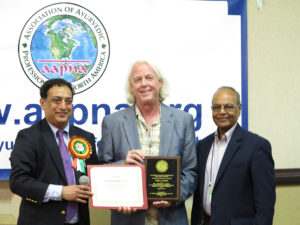
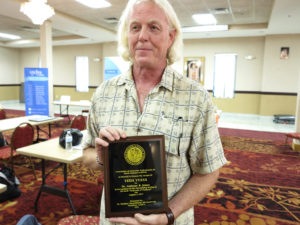
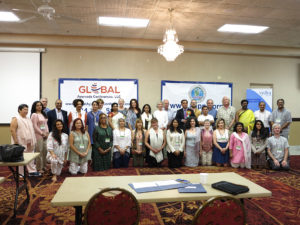
AAPNA Veda Vyasa Award 2017, The Association of Ayurvedic Professionals of North America (AAPNA) at the 27 Annual International Conference presented the Award of Veda Vyasa to Dr. Anthony B. James DNM(C), ND(T), MD(AM), DOM(C), DPHC(h.c.), PhD, M.Sc., RAAC, SMOKH, Professor and Dean of the Department of Sacred Natural Medicine and Ayurveda Medicine at SomaVeda College of Natural Medicine and School of Ayurveda Medicine, Brooksville, FL USA in recognition of his outstanding writing in his book “Ayurveda of Thailand, Indigenous Traditional Thai Medicine and Yoga Therapy” at the Hindu Temple of Atlanta, GA on August 5th. 2017.

The award was presented by AAPNA Directors Dr. Shekhar Annambhota, MD (Ayurveda) and Dr. Vijay Jain, MD


AAPNA International Conference August 2017


Dr. James was also privileged to present the Key Note speech opening the conference.

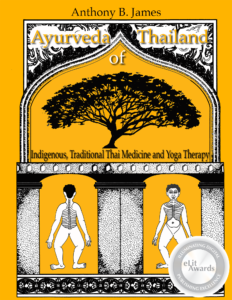
Two ways to get the book: Ayurveda of Thailand: Indigenous Traditional Thai Medicine and Yoga Therapy

Trade Paperback: Only $19.95: To review or order the paperback order on Amazon CLICK HERE!

Kindle Edition: Only $9.95: To review or order the Kindle version CLICK HERE!

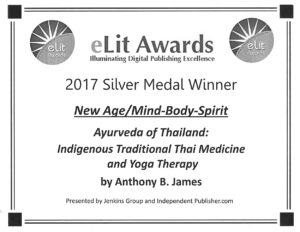
News Update! July 2017:  Just awarded the 2017 Silver Medal Winner in the eLit Awards (independent publishing) digital publishing excellence in the “New Age/ Mind-Body-Spirit award category!

For a Bio on Dr. Anthony B. James CLICK HERE!

Intro to SomaVeda Thai Yoga Tok Sen Stick Technique

Intro to SomaVeda® Thai Yoga “Tok Sen” Stick Technique

Tok Sen Stick Technique


Intro to using the SomaVeda® Thai Yoga Therapy Tok Sen Stick Technique in Thai Yoga therapy ministry protocols.

Demo by Aachan, Dr. Anthony B. James director of the SomaVeda College of Natural Medicine and Thai Yoga Center. “Tok Sen” technique can be a valuable adjunct for Ayurveda and Yoga Therapy protocols.

For more information on SomaVeda Indigenous Traditional Therapies® Thai Yoga Practitioner, Yoga Therapist and Teacher training visit us at https://thaiyogacenter.com

SomaVeda® is a registered Trademark of Anthony B. James


July 20th. 2017, 2nd. Annual SomaVeda® Teacher Conference and Advanced Workshop

July 20th. 2017, NAIC Seminary: 2nd. Annual SomaVeda® Teacher Conference and Advanced Workshop

Thai Yoga Center


NAIC/ SCNM: Thai Yoga Center for Indigenous Thai Yoga, Ayurveda, Yoga Therapy and Natural Medicine Photo’s SCNM: July 20th. to July 23rd. 2017, Four day conference and advanced workshops in Thai Yoga Therapy at The Native American Indigenous Church (NAIC): SomaVeda College of Natural Medicine and Thai Yoga Center located at the NAIC Sancturary in Brooksville, Florida.

SomaVeda® Certified Teachers and Teacher Candidates from across the country gathered to share and practice advanced SomaVeda® Ayurveda and Thai Yoga Therapy and ministry.

CLICK HERE FOR PHOTOS!

2nd. Annual SomaVeda® Thai Yoga Teacher Conference July 2017


Visit ThaiYogaCenter.Com to learn how to become a Certified SomaVeda® Thai Yoga Practitioner, Yoga Therapist or Teacher today!


Learn more about the science behind SomaVeda® Thai Traditional Medicine at www.ThaiMassage.Com

For information on NAIC Seminary College Degree Programs visit www.SomaVeda.Org

Thai Traditional Medicine: Indigenous Traditional Thai Yoga: Traditional Thai Massage: Indigenous Traditional Medicine: Yoga Therapy: Ayurveda: Ayurveda Yoga Therapist: Ayurveda Health Counselor: Yoga Therapist: Learn Thai Yoga: Doctor of Sacred Natural Medicine. NAIC/ SCNM: Thai Yoga Center for Indigenous Thai Yoga, Ayurveda, Yoga Therapy and Natural Medicine Photo’s Sacred Ayurveda, Yoga Therapy, SomaVeda® Thai Yoga, Indigenous Traditional and Natural Medicine.


SomaVeda Integrated Traditional Therapies® is a Registered  Trademark of Anthony B. James

Native American Indigenous ChurchPriory of Saving Grace

Ayurveda of Thailand Wins 2017 eLit Award

Ayurveda of Thailand Wins 2017 eLit Award

News Update! July 2017:  Just awarded the 2017 Silver Medal Winner in the eLit Awards (independent publishing) digital publishing excellence in the “New Age/ Mind-Body-Spirit award category!


Ayurveda of Thailand Wins 2017 eLit Award

Ayurveda of Thailand: Indigenous Traditional Thai Medicine and Yoga Therapy

PRESS RELEASE

New comprehensive textbook on the Ayurveda and Thai Yoga of Thailand!
Brooksville, FL, Release Date: 09/05/2016 –

Ayurveda of Thailand wins eLit Silver Medal 2017


Ayurveda of Thailand: Indigenous Traditional Thai Medicine and Thai Yoga are part of what makes Thailand, Thailand. The Royal ( Court or “Southern” Style) is the most classical form.

The book provides clear and concise instructions and details for the practice in a clinical setting. Over 160 photo and graphic illustrations present each traditional application in a logical format.

Readers will especially appreciate the detailed and well researched history and medical anthropology of Thailand’s great contribution to the world heritage of indigenous, traditional medicine systems. Thai Yoga Therapy is on par with Traditional Chinese Medicine and others.

It has become the nucleus of a new lifestyle and right livelihood for the thousands of US and Thai students, practitioners and teachers. Indigenous, Traditional Thai Massage (Indigenous Thai Yoga Therapy), also called “Ryksaa Thang Nuad Phaen Boran Thai” or the “ancient Chirothesia (Yoga Therapy) or hands-on healing” of Thailand, is born of a long tradition.

This unique system of indigenous, traditional, natural medicine and Yoga therapy finds it’s ancient roots first in the traditions of classical Ayurveda as far back as the 5th century BCE. Subsequently, the Vedic health and medical practices eventually became common practice in SE Asia. Burma (Myanmar) and Thailand were heavily influenced by succeeding generations of Buddhist influence, philosophy and practice. Some form of this traditional medicine has been taught and practiced in various locations for about 2500 years.

Two ways to get the book: Ayurveda of Thailand: Indigenous Traditional Thai Medicine and Yoga Therapy

Trade Paperback: Only $19.95: To review or order the paperback order on Amazon CLICK HERE!

Kindle Edition: Only $9.95: To review or order the Kindle version CLICK HERE!

News Update! July 2017:  Just awarded the 2017 Silver Medal Winner in the eLit Awards (independent publishing) digital publishing excellence in the “New Age/ Mind-Body-Spirit award category!


AUTHOR BIO:
The outstanding credits of Anthony B. James DNM(P), ND(T, MD(AM), DPHC(h.c.), OMD, PhD, RAAP, SMOKH include: Author, lecturer, Aachan and Master of Indigenous,Traditional Thai Medicine and Indigenous, Traditional Thai Massage, Traditional Naturopath, Medical Doctor(AM) specializing in Pastoral, Indigenous, Traditional, Natural, Native American and alternative medicine, Registered Ayurveda Clinician and Doctor of Philosophy in Indigenous Medicine.

Over 20,000 students have gone through his SomaVeda Integrated Traditional Therapies® educational programs since 1984. Honored by Royal Thai Government several times,TAT, Receiver of the Friend of Thailand award for Thai Medicine, Bangkok, Aachan and/or Master teacher and FIRST Westerner authorized to share Traditional Thai Medical Massage (Thai Yoga Therapy) in the west.

200 Hr. SomaVeda® Thai Yoga Class, June 2017

The SCNM: Thai Yoga Center Announces Indigenous Thai Yoga Therapy Practitioner Graduating Thai Yoga Class at NAIC Sanctuary

Logo-SCNM-Trans2

Brooksville, FL – June 2017 – Exceptional SomaVeda® Teachers, students and Practitioners from around the country and with varying levels of previous experience completed the June2017: 200 hour SomaVeda® Indigenous Thai Yoga Practitioner Certificate program. The Traditional Thai Yoga Practitioner programs are conducted under the authority of NAIC/ SCNM: Thai Yoga Center.

200 Hr. SomaVeda® Thai Yoga Class, September 2016
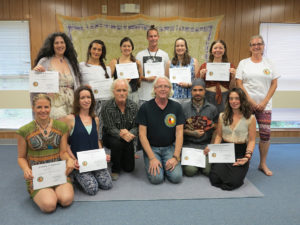
Each one individually and as part of an amazing group completed the requirements necessary to graduate with the prestigious Thai Yoga Center Certified SomaVeda® Thai Yoga Practitioner and or Teacher certificate.

The SomaVeda® Thai Yoga Practitioner Certificate Program is a 27 day long, 200 hour intensive apprentice style immersion program covering many of the basic concepts of SomaVeda® Thai Yoga, Ayurveda, Yoga Therapy Indigenous Traditional Medicine (ITTM).

June 2017 Thai Yoga Class

No other College of Natural Medicine, Registered School of Ayurveda and or Traditional Thai Yoga (Traditional Thai Massage) School offers this comprehensive curriculum.

Beginner and Intermediate students completed all required course work including additional personal intensive training and coaching with Aachan, Dr. Anthony B. James according to their individual practice. This individual coaching centered on spiritual and personal issues as well as both personal and professional ministry development. Every student learns how to develop a successful ministry model and therapeutic practice.

Each student was personally taught and coached individually by Aachan, Dr. Dr. Anthony B. James, Master teacher of SomaVeda® Thai Yoga supported by SomaVeda® Certified Teachers  Dr. Julie James, and Khruu Daniel Kram CTT. They now join the many other practitioners and teachers who have come out of SCNM: SomaVeda Integrated Traditional Therapies®: Thai Yoga Therapy and Indigenous Medicine courses.

To see the Photo’s from the June 2017 CTP Certificate Program CLICK HERE!

Find a SomaVeda® Indigenous Thai Yoga Certified Practitioner near you. Please see SomaVeda® Thai Yoga Practitioner Directory: Click Here!

Jurisprudence World Indigenous Medicine Conference 2017, Dr. Anthony B. James

Jurisprudence World Indigenous Medicine Conference 2017, Dr. Anthony B. James

DrJ Nevis Conference 2017
Dr. Anthony B. James (USA), AmaLia Wai Ching (Bali), Marvin S. Hausman, M.D. (USA), Nevis June 2017


Dr. Anthony B. James Jurisprudence/ legal presentation 10th. World Conference of Indigenous and Traditional Medicines, Nevis West Indies, June 2017. Dr. James an Aachan and Master teacher of Indigenous, Traditional Ayurveda and Thai Yoga discusses some basic principles of establishing a legal umbrella for practicing religious therapeutics. The conference was sponsored by SMOKH (Sacred Medical Order of the Church of Hope) a UN registered International ecumenical organization. www.SMOCH.org.

Please subscribe and let us know if you like this video!

Dr. James, director of the Native American Indigenous Church (NAIC) is director of the SomaVeda College of Natural Medicine and Thai Yoga Center of Brooksville, FL. (www.SomaVeda.Org & www.ThaiYogaCenter.Com)