
Alfalfa (Medicago sativa): The “Great Healer” in SomaVeda® Thai Yoga & Ayurvedic Nutrition
By Anthony B. James DNM(P), ND(T), MD(AM), RAC
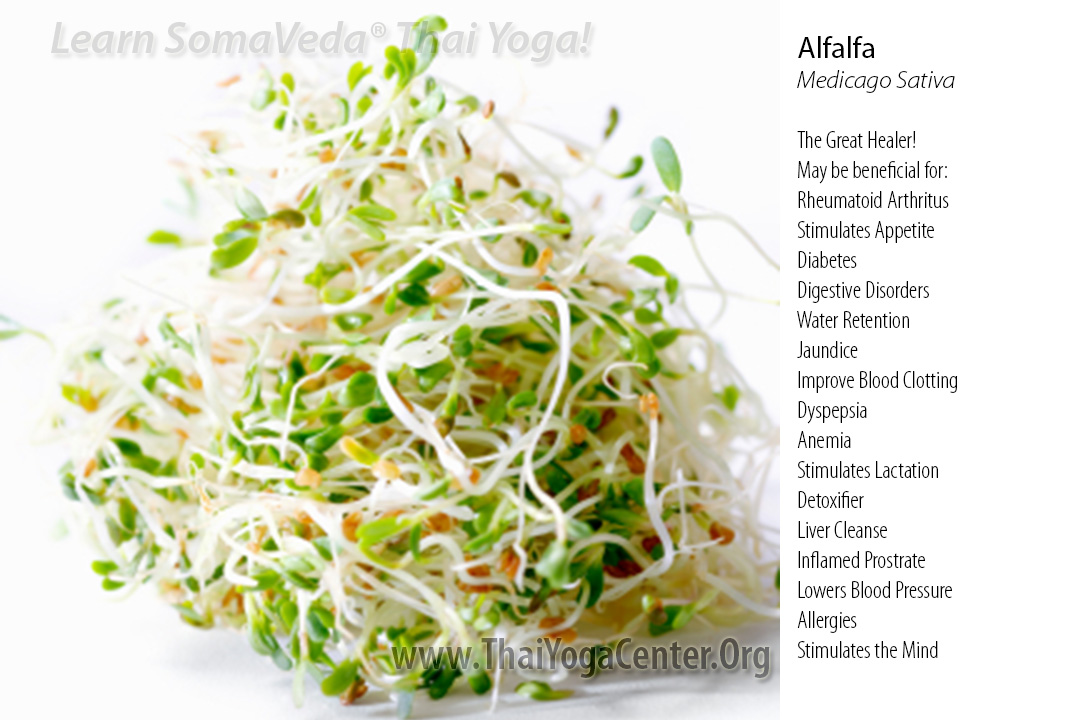
In the vast apothecary of nature, few plants bridge the gap between ancient wisdom and modern clinical nutrition as effectively as Alfalfa (Medicago sativa). Known traditionally to herbalists as “The Great Healer” (and by its Arabic name al-fscfscah, meaning “father of all foods”), Alfalfa is a profound embodiment of the Hippocratic injunction: “Let food be thy medicine and medicine be thy food.”
For practitioners of SomaVeda® Thai Yoga and Natural Medicine, Alfalfa is more than a garnish; it is a potent nutritional adjunct that can balance metabolism, modulate immune function, and support the body’s structural integrity during therapeutic bodywork.
The Nutritional Science: Why Alfalfa is “The Great Healer”
Modern nutritional science validates what traditional healers have known for centuries. Alfalfa’s deep root system (reaching up to 20 feet) allows it to mine the soil for minerals inaccessible to other plants.
Alfalfa for inflammation recovery, Alfalfa benefits for arthritis, Alfalfa nutrition for bodywork
Key Nutritional Constituents include:
- Vitamins: A, C, E, and K (essential for blood clotting and bone health).
- Minerals: Calcium, Potassium, Phosphorus, and Iron.
- Bioactive Compounds:
- Saponins: A family of chemical compounds proven to bind to cholesterol and prevent its absorption.
- Chlorophyll: Potent detoxifier and blood builder.
- Phytoestrogens: Including spinasterol and coumestrol, which may support hormonal balance.
- L-canavanine: An amino acid analog studied for anti-cancer properties (though used with caution in autoimmune cases).
- Alkalizing Diet
Ayurvedic Energetics: The Energetics of Alfalfa
To integrate Alfalfa into a SomaVeda® practice, we must understand its energetic qualities through the lens of Ayurveda: Ashvabala Ayurveda, Alfalfa cooling herbs, Ayurvedic herbs for joint pain.
- Rasa (Taste): Astringent (Kashaya), Bitter (Tikta), and slightly Sweet (Madhura).
- Virya (Potency): Cooling (Sheeta).
- Vipaka (Post-Digestive Effect): Pungent (Katu).
- Dosha Effect: It is excellent for balancing Pitta (due to its cooling nature) and Kapha (due to its drying/astringent nature). Excessive use may aggravate Vata due to dryness, so Vata types should consume it with healthy oils or in moderation.
- Agni: increases digestive fire.
- Ama: Reduces accumulation of waste and aids in removing waste byproducts of insuficient digestion and metabolic imbalance.
Comprehensive Health Benefits
Based on both traditional usage and contemporary research, Alfalfa is indicated for a broad spectrum of health optimizations:
- Musculoskeletal & Inflammatory Support
- Rheumatoid Arthritis: The alkalizing nature of alfalfa helps reduce uric acid and systemic acidity, common contributors to joint pain.
- SomaVeda® Integration: For clients receiving Thai Yoga therapy for mobility issues, Alfalfa serves as an internal anti-inflammatory, potentially reducing tissue resistance and improving range of motion.
- Metabolic & Cardiovascular Health
- Cholesterol Management: The high saponin content interferes with the absorption of cholesterol in the gut.
- Diabetes & Blood Sugar: Studies suggest alfalfa may improve insulin sensitivity and assist in blood sugar regulation.
- Lowering Blood Pressure: Its diuretic properties and mineral content support vascular health.
- Digestive & Detoxification Pathways
- Digestive Disorders & Dyspepsia: Contains eight digestive enzymes that aid in the assimilation of proteins and fats.
- Liver Cleanse & Jaundice: Acts as a hepatoprotective agent, encouraging bile flow.
- Water Retention: A natural diuretic that relieves edema without depleting potassium.
- Alkalizing Diet: Alfalfa acts as a PH balancer, counter-acting Acidosis, systemic acidity, common contributers to a host of illnesses and syndromes including Cancer.
- Bioavailability: By definition, increasing bioavailability means it aids in the assimilation of proteins and fats. Alfalfa supports the extraction from nutrient dense nutrition. When ingested, the same amount of food equals more nutritive factors.
- Hormonal & Reproductive Health
- Stimulates Lactation: A known galactagogue used traditionally to boost milk supply in nursing mothers.
- Prostate Health: Traditionally used to reduce swelling and irritation associated with benign prostatic hypertrophy (BPH).
- Immune Modulation
- Antioxidant Activity: High in beta-carotene and Vitamin E, protecting cells from free radical damage.
Integrating Alfalfa into Thai Yoga Therapy
At the Thai Yoga Center, we emphasize that manual therapy (Thai Yoga) is most effective when supported by internal biochemistry.
- Metabolic Balance (Agni): Alfalfa helps regulate the digestive fire (Agni) without overheating the system, making it ideal for clients with high Pitta (inflammation/heat) conditions.
- Ojas (Vitality) Builder: The mineral density of Alfalfa helps rebuild depleted tissues, vital for clients recovering from chronic fatigue or burnout.
- Post-Session Recovery: After a rigorous SomaVeda® session, the body releases metabolic waste. Alfalfa juice or sprouts act as a mineral-rich electrolyte replenisher to aid the “flush” and prevent soreness.
- Thai Traditional Medicine herbs, Sen Kalathari nutrition, SomaVeda® diet, Thai Yoga nutritional adjuncts
- Ama: Alfalfa reduces “Ama” or the accumulated toxins in the body. It supports any “detoxification” protocol. Commonly used in Pancha Karma and or Nuad Boran based detox.
Practical Usage & Sourcing
- Homeopathic Use: Used primarily to tone the digestive process, correct “tissue wasting,” and allay vesical irritability.
- Food as Medicine: Use fresh sprouts in salads, powdered leaf in smoothies, or tea infusions.
- Quality Control: Always obtain Alfalfa seeds and products from legacy, organic, and non-GMO sources. Conventionally grown alfalfa is often heavily sprayed with pesticides.
Precaution: Due to the high concentration of Vitamin K, those on blood thinners (like Warfarin) should consult a physician. Additionally, because Alfalfa contains L-canavanine, which can stimulate the immune system, persons with active Systemic Lupus Erythematosus (SLE) should avoid alfalfa seeds/sprouts. L-canavanine autoimmune safety, Safe alfalfa alternatives for Lupus
Traditional Names & Classifications
1. Classical Indian Ayurveda
In the modern Dravyaguna Vijnana (Ayurvedic Pharmacology), Alfalfa is identified by the Sanskrit name Ashvabala.
-
Sanskrit Name: Ashvabala (translates to “Horse Strength,” implying it imparts the vigor and stamina of a horse).
-
Synonyms: Vanamethika (Wild Fenugreek – due to its botanical similarity to Methi/Fenugreek).
-
Hindi/Unani: Lusan or Vilayati Ghas (Foreign Grass).
Ayurvedic Energetics (Guna Karma):
-
Rasa (Taste): Tikta (Bitter), Kashaya (Astringent).
-
Virya (Potency): Sheeta (Cooling).
-
Vipaka (Post-Digestive Effect): Katu (Pungent).
-
Dosha Action: Kapha-Pitta Shamaka (Pacifies Kapha and Pitta doshas). It can aggravate Vata if taken in excess due to its drying (Ruksha) quality, which is why it is often prescribed with a healthy fat (Anupana) like Ghee.
2. Traditional Thai Medicine (TTM)

In the Thai apothecary, Alfalfa is an introduced species (Naturalized). Unlike ancient endemic herbs like Plai or Galangal, it does not have a “Royal” name from the Ayutthaya period. It is integrated into the Thai Materia Medica based on its elemental properties.
-
Thai Common Name: Yaa-Alfalfa (หญ้าอัลฟัลฟ่า) – Literally “Alfalfa Grass.”
-
Elemental Classification (Thaat): Alfalfa is considered a Cooling Medicine (Yaa Yen).
-
Elemental Action: It nourishes the Thaat Din (Earth Element) by providing structure/minerals, while its cooling nature pacifies excess Thaat Fai (Fire Element/Inflammation).
Medicated Preparations & Traditional Remedies
While Alfalfa does not appear in the ancient Brihat Trayi (The Great Trio of Ayurvedic texts: Charaka, Sushruta, Vagbhata) as a complex polyherbal formulation ingredient, it is used extensively in Desiya Chikitsa (Indigenous/Folk Medicine) and modern Clinical Ayurveda.
Ayurvedic Remedies & Formulations
-
Ashvabala Swarasa (Fresh Juice Therapy):
-
Preparation: Fresh Alfalfa leaves are crushed to extract juice.
-
Indication: Used for Raktapitta (Bleeding disorders) due to its Vitamin K content (coagulant properties) and Pandu (Anemia) due to high iron and chlorophyll content.
-
Anupana (Vehicle): Often mixed with Carrot juice or Amla juice to potentiate absorption.
-
-
Ashvabala Churna (Alfalfa Powder):
-
Preparation: Shade-dried leaves ground into a fine powder.
-
Indication: Used as a Brimhana (nutritive tonic) for Dhatu Kshaya (tissue wasting) and convalescence after chronic fever.
-
Dose: 3-5 grams twice daily with warm water or milk.
-
-
Vanamethika Tea (Infusion):
-
Preparation: Hot infusion of the seeds or dried leaves.
-
Indication: Prameha (Urinary disorders/Diabetes) and Sandhivata (Arthritis). The diuretic action helps flush excess Kleda (moisture/waste) from the joints.
-
Traditional Thai Medicine (TTM) Applications
-
Nutritional Adjunct for “Sen” Line Therapy:
-
In SomaVeda® contexts, Alfalfa is used to support the Sen Kalathari (associated with the circulatory and kinetic energy systems). A warm infusion is given after therapy to cool the body and replenish minerals lost during the release of “heat” from the muscles.
-
-
Thai Postpartum Care (Yu Fai Adjunct):
-
While not used during the hot compress stage (which focuses on heating herbs), Alfalfa sprouts are prescribed in the diet immediately following Yu Fai to rebuild blood volume (Bamrung Lueat) and stimulate lactation (Bamrung Nam Nom) without overheating the mother.
-
Documented Uses: UN & WHO Guide Publications
Reference Source: WHO Monographs on Selected Medicinal Plants & United Nations FAO Ecocrop Database.
The World Health Organization (WHO) and UN FAO recognize Medicago sativa for specific pharmacological activities that align with traditional claims:
🌿 Clinical Pearl: The “Double-Edged Sword” of Alfalfa
Important Safety Contraindication for Autoimmune Conditions
For the SomaVeda® Practitioner: While Alfalfa is a nutritive powerhouse, the seeds and fresh sprouts contain a potent non-protein amino acid called L-canavanine.
The Western Science Mechanism: L-canavanine is a structural analogue (a “chemical mimic”) of the essential amino acid L-arginine. Because they look so similar, the body’s enzymes can mistakenly insert L-canavanine into proteins in place of Arginine.
This “mistaken identity” results in aberrant proteins that can dysfunction. Crucially, this process has been shown to reactivate or exacerbate Systemic Lupus Erythematosus (SLE) and other autoimmune conditions by stimulating T-cells to attack the body’s own DNA.
The Ayurvedic & SomaVeda® Perspective: In traditional terms, we view this as a specific form of Prajnaparadha (crimes against wisdom) at the cellular level. The body’s intelligence becomes confused, leading to a sharp rise in Tejas (cellular fire/inflammation) that burns up Ojas (vital immunity).
⚠️ Clinical Rule of Thumb:
ALWAYS screen clients for a history of Lupus (SLE) or severe Rheumatoid Arthritis before recommending raw Alfalfa sprouts or seeds.
SAFE ALTERNATIVE: The mature leaves of the Alfalfa plant contain significantly lower levels of L-canavanine than the seeds/sprouts. For autoimmune clients, sticking to dried leaf tea or heat-treated preparations is safer, or simply substituting with Moringa (Moringa oleifera) which offers a similar mineral profile without the L-canavanine risk.
Ideas for Further Research
For students of the American College of Natural Medicine, consider investigating:
- The comparison of bioavailability between Alfalfa juice vs. whole sprout consumption.
- The synergistic effect of Alfalfa and Turmeric in managing osteoarthritis in Thai Yoga clients.
- The role of Alfalfa phytoestrogens in managing menopausal symptoms during somatic therapy.
Verifiable Resources & References
To deepen your understanding, please review the following clinical data:
- Cholesterol Reduction: Molgaard, J., et al. “Alfalfa seeds lower low density lipoprotein cholesterol and apolipoprotein B concentrations in patients with type II hyperlipoproteinemia.” Atherosclerosis, 1987. Link to Abstract
- Anti-Diabetic Properties: Bora, K.S., & Sharma, A. “Phytochemical and pharmacological potential of Medicago sativa: A review.” Pharmaceutical Biology, 2011. Link to Research
- Anti-Inflammatory Effects: Hong, Y.H., et al. “Ethyl acetate extracts of alfalfa (Medicago sativa L.) sprouts inhibit lipopolysaccharide-induced inflammation in vitro and in vivo.” Journal of Biomedical Science, 2009. Link to Full Text
- Ayurvedic Herbology: Frawley, Dr. David, and Vasant Lad. The Yoga of Herbs: An Ayurvedic Guide to Herbal Medicine. Lotus Press. Link to Resource
Bibliographic References & Resources
1. Classical Indian Ayurveda (Ashvabala)
-
Primary Source Identification:
-
Scientific Source: Plants of the World Online (POWO). “Medicago sativa L.” Royal Botanic Gardens, Kew.
-
Ayurvedic Pharmacology: Sharma, P.V. Dravyaguna Vijnana. Vol. II. Chaukhambha Bharati Academy, Varanasi. (Standard text identifying Medicago sativa as Ashvabala or “Strength of the Horse”).
-
Clinical Review: Kargozar, R., et al. “(PDF) Ashvabala (Medicago sativa Linn.) Nari Aushadhi – A Review.” ResearchGate. (Confirms the synonym Nari Aushadhi or “Women’s Medicine” and its use as a Rasayana).
-
Link: ResearchGate: Ashvabala Review | Kew Science: Medicago sativa
-
2. Traditional Thai Medicine & Ethnobotany
-
Thai Classification:
-
Source: Thai National Master Plan for Herb Development. Ministry of Public Health, Thailand.
-
Usage Context: Integrated into Sen Line therapy as a “Cooling Medicine” (Yaa Yen) to balance the Fire Element (Thaat Fai).
-
Ethnobotanical Data: Feedipedia. “Alfalfa (Medicago sativa).” A programme by INRAE, CIRAD, AFZ and FAO. (Documents the global naturalization and use of Alfalfa as a nutritive fodder and medicinal plant in tropical regions).
-
3. World Health Organization (WHO) & UN Guidelines
-
Pharmacological Verification:
-
Source: WHO Monographs on Selected Medicinal Plants. Vol. 1-4. World Health Organization, Geneva.
-
Documented Actions: Verifies uses as a diuretic (Mutrala), antihyperlipidemic (Medohara), and galactagogue (Stanya Janana).
-
Safety Warning: Specifically notes the presence of L-canavanine in seeds/sprouts and its contraindication for Systemic Lupus Erythematosus (SLE), aligning with the Ayurvedic caution against “heating” or “aggravating” autoimmune conditions in excess.
-
Link: WHO Monographs (PDF Archive) | FAO Ecocrop: Medicago sativa
-
4. Clinical Nutrition & Modern Integration
-
Therapeutic Applications:
-
Source: Restorative Medicine Monographs. “Alfalfa (Medicago sativa).”
-
Integration: Supports the use of Alfalfa for bone density (Vitamin K) and metabolic recovery, relevant to SomaVeda® structural therapy.
-
Thai Yoga Center: The Thai Yoga Center offers five professional certification programs based on Traditional Thai Medicine, Ayurveda and Native Natural Medicine and Holistic Services. On-line and LIVE in person training and certificate courses and programs are available. CLICK HERE for more information on Courses and programs.
SomaVeda® and SomaVeda Integrated Traditional Therapies® are Federally Registered Trademarks/Servicemarks and proprietary Intellectual Property, All World Rights Reserved.
Indigenous, Traditional Naturopathic Medicine includes practices that support self-healing and wellness through safe, natural, non-invasive methods. To learn more about how to gain a complete education in traditional natural medicine, contact the American College of Natural Medicine. ACNM offers four professional Certificate courses and three college degrees.
To learn how to be part of the cutting edge of tomorrow’s healing today, [Click Here]!
Disclaimer: This article regarding Alfalfa as Natural Medicine is presented solely as an opinion for educational purposes and is not intended as a substitute for competent medical advice regarding any medical condition. Please see your physician or qualified medical professional when considering any treatment for any disease.